Air Fryer vs Deep Fryer: Which Should You Choose? (November 2026)
Choose an air fryer for lower oil use and simpler cleanup, or a deep fryer for classic fried texture. The best choice depends on how often you fry, how much food you cook, and the cleanup you can accept.
On this page (8 sections)
- Air fryer vs deep fryer: which gives better results?
- How much oil does each method use?
- Which one is easier to clean?
- Which appliance fits a small kitchen?
- Which is better for cooking 2 foods together?
- Which products fit each cooking style?
- How should you choose between air frying and deep frying?
- What is the final air fryer vs deep fryer choice?
Choose an air fryer for lower oil use and easier cleanup, or a deep fryer for classic fried texture. This choice shapes how you cook each week, not just what you fry.
In this air fryer vs deep fryer comparison, your usual foods, batch size and tolerance for hot oil matter more than the appliance label. Think about fries, chicken, vegetables, battered foods and reheated leftovers, since each method handles them in a different way.
An air fryer circulates hot air around food in a basket. It can brown and crisp with little or no oil in the basket, and the parts you wash after a meal are usually dry or lightly coated.
A deep fryer surrounds food with heated oil. That pool of oil gives a rich, even crust on battered items, but it also has to be heated, strained, stored and handled with care.
That basic difference affects crispness, cleanup, storage and how much oil you keep in the kitchen. It also changes the routine, because air frying fits a quick weeknight meal more easily, while deep frying suits meals planned around a familiar fried dish.
Capacity matters in the same practical way. A larger basket helps a family cook, but a smaller appliance may fit a counter and a smaller household better.
Use this guide to match the method to the food you make most. The best pick is the one you will use often, store safely and clean without dreading the job.
If you mostly want crisp vegetables, fries and reheated food with less oil, start with an air fryer. If you mostly want battered fish, onion rings and classic fried texture, a deep fryer may deserve a place on your counter.

Air fryer vs deep fryer: which gives better results?
Deep frying gives the most traditional fried texture, while air frying gives crisp results with far less oil. Neither method is a universal replacement for the other, and the right answer depends on the dish on the plate.
A deep fryer surrounds food with hot oil. That full contact helps batter set quickly and gives fries and onion rings a deep golden crust with a tender center.
This suits battered fish, onion rings, fries and other foods where a fully fried crust is central to the dish. The oil also carries flavor and helps coatings puff, crisp and hold together during cooking.
An air fryer uses circulating hot air instead. It can brown and crisp food, but the result may feel lighter and less rich than food cooked in oil.
That lighter result is often a plus for vegetables, potato wedges, chicken pieces and reheated leftovers. You get crunch on the surface without soaking the food in oil, and cleanup stays simpler.
The trade-off is coating and moisture. A thick wet batter that needs oil to set may not cook the same way in hot air, so some recipes fit one method much better than the other.
The Cosori TurboBlaze reaches 450°F and has 5 fan speeds. Its 6-quart basket suits family meals when you want air-fried food without filling a fryer with oil.
Those higher temperatures help with browning, while the fan speeds let you adjust airflow for delicate foods and sturdy vegetables. The wide temperature range also supports roasting, baking, drying and proofing, which a deep fryer cannot do.
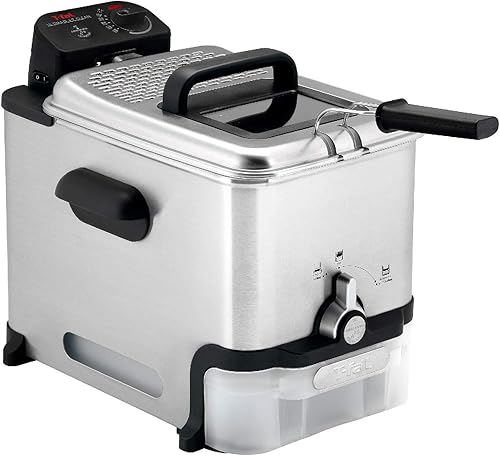
The T-fal offers a 300°–375°F temperature range and a 3.5-liter oil capacity. Its adjustable thermostat suits recipes where oil temperature affects the crust and interior texture.
That control matters for battered foods, because oil that is too cool can make a heavy crust and oil that is too hot can brown the outside before the center cooks. The larger oil volume also helps maintain heat when a full basket goes in.
The T-fal suits home cooks who fry for a group and want consistent results across a batch. It is less suited to a small kitchen or a cook who wants to avoid storing several liters of oil.
The Presto GranPappy takes a simpler path with 6 cups of oil and automatic temperature maintenance. It suits small batches of fries, shrimp or onion rings for one or two people, without the larger oil capacity of the T-fal.
If you want traditional texture in a modest batch, that compact deep fryer is a sensible match. If you want crisp food with far less oil and more cooking functions, an air fryer is the better starting point.
How much oil does each method use?
Air frying uses much less cooking oil, while deep frying requires enough oil to surround the food. That is the clearest practical difference between these appliances.
The Cosori says its air fryer can produce similar crispy fries with up to 95% less oil than traditional deep frying. You may still brush, spray or toss food with some oil, depending on the recipe and the result you want.
The T-fal holds 3.5 liters of oil and filters it into a sealed container for reuse. That can reduce waste and make oil storage more orderly, but you still need to fill, filter and handle the oil safely.
The Presto GranPappy uses 6 cups of oil and has a snap-on lid for storing oil after it cools. Its smaller oil requirement makes it a useful choice when you want deep-fried food without a larger fryer.
Follow safe food-handling guidance from the USDA, especially when cooking raw meat or handling hot oil.
Which one is easier to clean?
Air fryers usually involve less cleanup because there is no large pool of oil to drain and store. A deep fryer with filtration can reduce the work, but it does not remove oil handling.
The Cosori has a dishwasher-safe basket and crisper plate. Its PFAS-free ceramic coating is on the basket and crisper tray, so you can remove those parts for routine washing.
The Ninja has 2 cooking baskets and dishwasher-safe crisper plates. Two baskets can help separate foods, but they also create 2 cooking surfaces to wash after a meal.
The T-fal filters and stores used oil in a sealed container. Its components include the frying basket, bowl, lid and oil box, so cleanup involves both food residue and the oil system.
The Presto has a nonstick surface inside and out. It is not immersible, so unplug it, let it cool fully and clean it according to its care instructions.
If cleanup is the main reason you're choosing an air fryer, a basket air fryer buying guide can help you compare basket shape, capacity and daily care.
Which appliance fits a small kitchen?
A single-basket air fryer or compact deep fryer is easier to place than a wide dual-basket model. Measure the counter, cabinet storage and the space needed to use the appliance before choosing.
The Cosori measures 14.4 in deep x 11.8 in wide x 11.9 in high. It has a 6-quart square basket, giving you a family-sized air-frying option without the width of a dual-basket unit.
The Ninja measures 13.86 in deep x 15.63 in wide x 12.4 in high. Its 2 independent baskets are useful, but the extra width matters on a narrow counter.
The T-fal measures 18.3 in deep x 13.7 in wide x 14.8 in high. Its oil capacity is useful for larger fried batches, but plan for a deeper and taller countertop space.
The Presto measures 9.87 in deep x 10.62 in wide x 9.18 in high. Its compact size suits a smaller kitchen, provided you have a safe place to use and cool it.
Leave room to place food, remove baskets or handle oil safely. A cabinet footprint is not the same as the working space you need around the appliance.
Which is better for cooking 2 foods together?
The Ninja is the strongest match when you want 2 foods to cook separately and finish at the same time. Its DualZone design has 2 independent 4-quart baskets.
Smart Finish lets 2 foods use different settings while finishing together. Match Cook copies settings across both zones when you want the full 8-quart capacity to follow one program.
This layout suits meals such as a main dish in one basket and a side in the other. It also helps when the foods need different temperatures or cooking times.
A single basket can still handle family meals, but you may need to cook foods in sequence. The Cosori's 6-quart basket is a better fit when you prefer a simpler appliance and don't need separate zones.
For another air fryer comparison, see our Cosori vs Ninja air fryer guide. Our best Ninja air fryers guide also helps if separate cooking zones are high on your list.
Which products fit each cooking style?
The Cosori and Ninja suit lower-oil cooking, while the T-fal and Presto suit traditional deep frying. The best pick depends on the result and routine you value most.
Our score weighs specs, features and buyer feedback against the needs of this comparison.
Cosori TurboBlaze Air Fryer
The Cosori TurboBlaze has a 6-quart capacity, 9-in-1 cooking functions and a 1725-watt output. Its programs include air fry, roast, broil, frozen, bake, dry and proof.
The PFAS-free ceramic coating covers the basket and crisper tray. The basket and crisper plate are dishwasher-safe, which supports a shorter cleanup routine after air-fried meals.
Its 5 fan speeds give you more control over airflow, while the 90°–450°F range covers low-temperature drying and high-temperature crisping. Choose it when one broad-use basket matters more than cooking 2 foods separately.
T-fal Deep Fryer with Basket
The T-fal holds 3.5 liters of oil and up to 2.65 lb of food, with a stated capacity for portions for up to 6 people. Its 1700-watt heating system has a 300°–375°F temperature range.
The oil filtration system stores filtered oil in a sealed container for reuse. A locking lid, viewing window, cool-touch handles and automatic shut-off add practical features for countertop frying.
Choose it when traditional deep-fried texture is the main goal. Skip it if you want to avoid storing several liters of oil or prefer a basket that can go into the dishwasher.
Ninja Foodi Air Fryer
The Ninja Foodi Air Fryer has an 8-quart DualZone capacity split into 2 independent 4-quart baskets. Its 6 programs are air fry, air broil, roast, bake, reheat and dehydrate.
The Smart Finish and Match Cook controls address different meal patterns. Use separate settings when 2 foods need different treatment, or copy one setting across both baskets.
Its temperature range is 105°–450°F. Choose it for family meals with a main and side, but measure your counter because its 15.63-in width is greater than the Cosori's.
Presto 05411 GranPappy Electric Deep Fryer
The Presto GranPappy uses 6 cups of oil and has a 1500-watt output. It maintains frying temperature automatically and has no controls to set.
Its aluminum body has a PFAS-free ceramic nonstick surface. The snap-on lid stores cooled oil, and the included scoop lifts, drains and serves food.
Choose it when you want a compact deep fryer with a simple setup. Its smaller capacity suits modest batches better than the T-fal's 3.5-liter oil system.
How should you choose between air frying and deep frying?
Choose the method that matches your most common meal and cleanup routine. The appliance with the bigger capacity is not automatically the better choice if you rarely cook that much food.
Pick an air fryer if you want to reduce oil, cook more than one type of food and clean removable parts after the meal. The Cosori is the simpler single-basket choice, while the Ninja is better for 2 foods at once.
Pick a deep fryer if the crispness of fully oil-fried food matters most. The T-fal gives adjustable temperature control and filtered oil storage, while the Presto keeps the setup smaller and simpler.
Air fryers can also cover cooking jobs that deep fryers cannot. The Cosori dries and proofs, and the Ninja reheats and dehydrates, so their programs may replace more than one cooking routine.
Our air fryer vs Instant Pot comparison is useful if you are also weighing air frying against pressure cooking and multicooker functions.
What is the final air fryer vs deep fryer choice?
Choose the Cosori for lower-oil family cooking, the Ninja for 2 foods at once, the T-fal for classic fried texture and filtered oil, or the Presto for compact small-batch frying. Each pick fits a different routine, so start with the meals you make most.
An air fryer is the better everyday fit when cleanup and oil use guide your decision. It suits weeknight fries, vegetables, reheated leftovers and family meals where a crisp surface is enough.
A deep fryer is the better fit when a traditional fried crust is worth the extra oil handling. It suits battered fish, onion rings and fries where oil cooking gives the texture you want.
Measure your counter and storage space, then choose capacity around the food you actually cook. A larger appliance only helps if you have room to use it, load it and clean it safely.
For air-fryer alternatives, our guide to air fryer toaster ovens with baskets explains how basket design changes cooking and cleanup.
If your household needs larger air-fried meals, read Is an air fryer toaster oven good for a family?. For another basket-focused comparison, see our guide to best Instant Vortex air fryers.
Frequently asked questions
Is an air fryer healthier than a deep fryer?
An air fryer can reduce oil use compared with deep frying, but healthier eating depends on the full food and cooking method. The Cosori says it uses up to 95% less oil for its air-fried results.
Deep fryers fully immerse food in oil, which creates a different texture and adds more cooking oil.
Which tastes better, an air fryer or a deep fryer?
A deep fryer usually suits food that needs a fully oil-fried crust, while an air fryer suits foods where a crisp surface with little oil is enough. Results also depend on the food, coating, moisture and cooking time, so the better flavor match depends on what you make most.
Is an air fryer easier to clean than a deep fryer?
An air fryer is usually easier to clean because it does not require several liters of oil to strain, store or replace. The Cosori has a dishwasher-safe basket and crisper plate.
Deep fryer cleanup can be simpler with filtration, as on the T-fal, but oil still needs careful handling.
Can an air fryer replace a deep fryer?
An air fryer can replace a deep fryer for many foods, including fries, vegetables and some breaded items, but it won't produce exactly the same oil-fried crust. Choose a deep fryer if that traditional texture is the main reason you fry.
Which is better for a family?
Choose by the food you cook together. The Ninja has 8 quarts split into 2 independent baskets, while the Cosori has a 6-quart basket.
The T-fal handles up to 2.65 lb of food, and the Presto is a smaller 6-cup-oil option for simpler batches.


