How to Bake Bread in a Toaster Oven
Bake bread in a toaster oven with a small loaf and a pan that fits with room above it. Follow your recipe’s temperature as a starting point, watch the crust, and check the center before cooling.
On this page (8 sections)
- How to Bake Bread in a Toaster Oven
- Can you bake bread in a toaster oven?
- How do you choose a bread recipe and pan?
- How should you set the toaster oven?
- How do you bake bread without burning the top?
- How can you tell when the loaf is done?
- What if you want to bake a different kind of bread?
- What is the simplest way to get a good small loaf?
How to Bake Bread in a Toaster Oven
Bake bread in a toaster oven with a small loaf and a pan that fits with room above it. Use your recipe’s temperature as a starting point, watch the crust as it bakes, and check the center before cooling.
For countertop models suited to everyday toast, see toaster ovens for toasting bread.
The main challenge is limited space: a tall loaf may rise close to the heating elements, and a wide pan can block airflow or fail to fit. If you need more room, compare large toaster ovens.
Measure the oven and pan first, then choose a recipe sized for the available space.
Can you bake bread in a toaster oven?
Yes, many small loaves can bake in a toaster oven if the pan and risen dough fit safely. Check the oven manual for clearance and pan guidance before you start.
A toaster oven heats a smaller space than a full-size oven. That makes close monitoring useful, since the top of a loaf may brown while the center still needs time.
If you’re new to countertop baking, What Is a Toaster Oven That Bakes? Explained covers the features that matter for baking.
A toaster oven can suit small batches, but a full-size oven may be easier for tall loaves or several pans. For larger countertop options, compare French door toaster ovens.
How do you choose a bread recipe and pan?
Choose a small loaf recipe and a pan that leaves room for the dough to rise. Measure the oven’s usable width, depth, and height, then compare those measurements with the pan and the loaf’s expected height.
A recipe written for a standard loaf pan may produce too much dough for a compact oven. Look for a small-batch recipe, or divide the dough only if the recipe’s instructions allow it.
For help with dough rising, see toaster ovens with a proof setting.
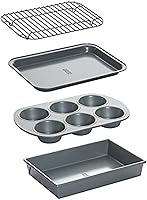
The Chicago Metallic 4-Piece Toaster Oven Bakeware Set includes a 9.5 x 6.25 in baking pan and an 11 x 7 in roast/cake pan, so compare each pan’s dimensions with your oven before choosing one.
Don’t assume a pan fits just because the oven door closes. Leave space between the pan and the heating elements, and make sure the rack can slide in and out without tipping.
How should you set the toaster oven?
Follow your recipe’s temperature and the oven manual, then watch the first bake closely. Preheat if the recipe calls for it and your oven supports that step.
Countertop ovens vary in how they heat and how much room they leave above a pan. For example, BLACK+DECKER says to preheat its TO1313SBD for 10 minutes and keep food and bakeware at least 1½ in from the top elements.
Set the oven on a stable, heat-safe surface with the ventilation space its manual requires. For overhead placement advice, see the under-cabinet toaster oven guide.
Use oven mitts when handling the hot door, rack, or pan.
How do you bake bread without burning the top?
Watch the top and edges as the loaf bakes, and adjust only in small steps if browning runs ahead of the center. Keep the oven door closed as much as possible so you don’t interrupt baking.
If the top darkens too quickly, lower the temperature slightly and continue baking while monitoring the loaf. You can also rotate the pan if the oven manual allows it and one side is browning faster.
Only cover the loaf if the cover is safe for your oven and remains clear of the heating elements. Don’t use foil or another cover without checking the manual first.
Should you use convection or a preset?
Use the baking mode recommended by your recipe and oven manual. Presets can be convenient, but a manual temperature and timer give you a direct way to follow a recipe.
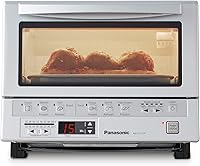
The Panasonic FlashXpress has six one-touch controls and manual temperature and timer settings. Panasonic says its infrared elements require no preheating, so follow its instructions if you use this oven rather than assuming every toaster oven works the same way.
How can you tell when the loaf is done?
Check doneness using the recipe’s cues, not crust color alone. A browned top does not guarantee the middle is baked through.
Use a thermometer if your recipe gives an internal temperature target. Otherwise, follow its recommended checks, and allow more time if the center still seems underbaked.
Lift the loaf out carefully and let it cool as the recipe directs. Cutting too soon can make the center seem gummy, even when the loaf has finished baking.
What if you want to bake a different kind of bread?
Match the pan and timing to the bread style. A dense quick bread and a risen yeast loaf can need different pans and doneness checks.
If you are comparing ovens for bread, see steam toaster ovens.
For a sweet loaf, see How to Bake Banana Bread in a Toaster Oven. For other small-batch baking ideas, try How to Bake Cookies in a Toaster Oven.
If bread baking will be a regular task, compare the best toaster ovens for baking bread and focus on interior height, rack position, and pan fit. For broader appliance tradeoffs, read Is It Better to Use a Toaster Oven or an Oven?.
A toaster oven may also work for other small meals when you have the right pan and clearance. See how to bake a cake in a toaster oven, how to bake chicken in a toaster oven, or how to toast nuts in a toaster oven.
What is the simplest way to get a good small loaf?
Measure first, use a small recipe, and monitor the loaf until the center is done. For model recommendations, see toaster ovens for baking.
Those steps help you work around a compact oven’s limited height and capacity.
Choose a toaster oven with enough room for your pan and the loaf’s rise, then follow its manual for heat settings and clearance. For compact model options, compare 4-slice toaster ovens.
If the pan crowds the elements or the loaf is too tall, use a smaller recipe or a larger oven.
Frequently asked questions
Can you bake bread in a toaster oven?
Yes. Use a small loaf recipe and a pan that fits with clearance above it, then monitor browning because the heating elements are close to the food.
Follow the oven manual, use the recipe temperature as a starting point, and check that the bread is cooked through before cooling.
What kind of pan fits in a toaster oven?
The right pan is one that fits on the rack without touching the walls or heating elements and leaves room for the loaf to rise. Measure the usable interior and check the pan’s outside dimensions, including handles, before baking.
Follow your toaster oven manual for approved materials and clearance.
Should you cover bread in a toaster oven?
Covering can slow browning if the crust darkens before the center finishes, but only use a cover approved for your oven and keep it clear of the elements. Check the manual before using foil or a lid.
You can also lower the temperature slightly and continue baking while monitoring the loaf.
How do you know when toaster oven bread is done?
Use the recipe’s doneness cues, such as a firm crust and a loaf that releases from the pan, then check the center with an instant-read thermometer if the recipe provides a target. Small ovens can brown the outside early, so color alone may not show whether the middle is baked.