How to Make Potato Skins in the Oven
To make potato skins in the oven, bake potatoes until tender, halve and scoop them, then bake the shells cut side down until crisp. Add toppings and return them to the oven until hot and melted.
On this page (11 sections)
- How do you make potato skins in the oven?
- Which potatoes work best for oven potato skins?
- How much potato should you scoop out?
- How do you get crisp potato skins in the oven?
- Which toppings melt well on potato skins?
- Can you make potato skins in a convection toaster oven?
- Does an air fryer basket help crisp potato skins?
- How do you keep the potato flesh from going to waste?
- What mistakes make oven potato skins soft?
- How should you reheat leftover potato skins?
- How to make potato skins in the oven for your kitchen
To make potato skins in the oven, bake potatoes until tender, halve and scoop them, then crisp the shells before adding toppings. Return them to the oven until the cheese melts, and serve while the edges are hot and crisp.
Use russet potatoes for sturdy shells and fluffy centers. Scrub and dry them well, then bake whole until a knife slides through the center with little resistance.
How do you make potato skins in the oven?
Bake, scoop, crisp, top, and melt is the basic method. Bake at 400°F, allow the potatoes to cool enough to handle, then bake the hollowed shells cut side down before adding toppings.
- Heat the oven to 400°F.
- Scrub 4 medium russet potatoes and dry them thoroughly.
- Prick each potato a few times with a fork and bake on a rimmed pan until tender, about 45 to 60 minutes.
- Cool until you can handle them, then halve lengthwise.
- Scoop out most of the center, leaving a thin layer of potato attached to the skin.
- Brush the shells lightly with oil and season with salt.
- Place cut side down on a baking sheet and bake until browned at the edges, about 10 minutes.
- Turn cut side up, add toppings, and bake until hot and melted.
Potato size changes the baking time. If the centers are still firm, bake the potatoes longer before cutting them.
Which potatoes work best for oven potato skins?
Medium russets make sturdy, crisp shells with a fluffy layer of potato inside. Choose potatoes that are similar in size so they finish baking at about the same time.
Scrub away dirt and dry the skins before baking. Moisture on the surface can slow browning, so don't wrap the potatoes in foil if you want the skins to dry and crisp.
A little oil helps the outside brown. Use a thin coating rather than soaking the shells, which can leave them greasy.
How much potato should you scoop out?
Leave about ¼ inch of potato attached to the skin so each shell holds its shape. Scoop more if you want a crisp, hollow bite, but stop before the spoon reaches the skin.
Save the scooped potato for mashed potatoes, soup, or another meal. A small spoon works well near the ends, where the shell can be thinner.
If a shell tears, place it on the pan with the opening facing up and keep the toppings light. The other halves can still be filled normally.
How do you get crisp potato skins in the oven?
Bake the shells cut side down first, then turn them up for toppings. This gives the cut surface direct contact with the hot air and lets moisture escape from the hollow side.
A metal baking sheet gives the shells a stable surface. Leave space between them so hot air can move around the edges, and check early if your oven browns food quickly.
Convection can help circulate hot air around the shells. Learn how convection cooking works in a toaster oven before adjusting the heat or timing for a fan setting.
The BLACK+DECKER TO1313SBD fits a 9-inch pizza or 4 slices of bread. Its natural convection airflow circulates heat, and the maker recommends a 10-minute preheat for consistent cooking and crisp results.
Keep the shells and pan at least 1½ inches from the top heating elements. The outer surfaces get hot during use, so use oven mitts and leave space for ventilation.
Which toppings melt well on potato skins?
Use cooked, relatively dry toppings that heat through quickly. Shredded cheddar, crumbled cooked bacon, sliced scallions, and a spoonful of sour cream after baking are familiar choices.
Cook bacon before topping the shells, and drain off excess grease. Raw meat needs to be cooked separately before it goes on the potatoes.
Add cheese near the end so it melts without overbrowning. Keep wet toppings, such as salsa or sour cream, off the shells until after baking if crispness matters.
For a shared snack spread, serve the skins alongside how to make oven nachos. Keep each dish on its own pan so you can remove it when its cheese and edges are ready.
Can you make potato skins in a convection toaster oven?
Yes, if the toaster oven has enough room for the potatoes and pan without crowding. Use its baking or convection setting, and check the skins early because smaller cavities and fan settings can change browning speed.
For a compact oven, bake fewer potatoes at once and arrange them with space around each one. Cut the potatoes in half after baking, since whole potatoes need time for the centers to turn tender.
The Breville BOV900BSS Smart Oven Air Fryer Pro has regular and super convection settings, plus a bake function. Its listed interior size is 16 x 13.5 x 7 inches, so check your potato and pan sizes against the cooking space.
Breville says super convection moves a greater volume of hot air for air frying, dehydration, and roasting. For potato skins, start with regular convection or bake, then watch for browning rather than assuming the fan will shorten the cooking time by a set amount.
A countertop oven may suit a small batch when you don't want to heat a full-size oven. Compare whether a toaster oven or an oven is better for the amount of food and pan space you need.
Does an air fryer basket help crisp potato skins?
A raised basket can expose more of the shells to circulating heat, which may help when your oven has convection. Set it over a baking sheet if the basket design allows, so the pan can catch drips.
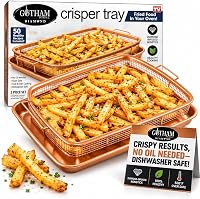
The GOTHAM STEEL Air Fryer Basket For Oven is a two-piece crisper tray and basket made from aluminum with a nonstick copper coating. It's described for baking, frying, roasting, and crisping foods, and the set is dishwasher safe.
The listed size is 16.5 x 12.5 inches, so measure your oven rack before using it. Don't crowd the shells, and follow the cookware's care instructions.
A regular rimmed baking sheet is enough if you already have one and your oven browns the shells well. The basket is most useful when you want airflow beneath the food or already use a convection setting.
How do you keep the potato flesh from going to waste?
Save the scooped centers for another dish instead of throwing them out. Mash them with butter and milk, add them to soup, or fold them into a breakfast hash.
Use the potatoes soon after scooping, or refrigerate the cooked flesh in a covered container. Don't leave cooked potatoes at room temperature for more than 2 hours.
Serve the skins with a vegetable side if you want a fuller meal. How to roast zucchini in the oven offers an easy pairing, while how to roast pears in the oven is a simple way to finish the meal.
What mistakes make oven potato skins soft?
Wet shells, crowded pans, and heavy toppings are common causes of soft skins. Dry the potatoes before baking, give the shells room, and crisp them before filling.
Don't scoop all the way through the skin. A thin potato layer supports the shell and helps keep toppings from breaking through.
Avoid adding toppings straight from a watery container. Drain ingredients such as salsa or beans, and add sour cream after baking.
How should you reheat leftover potato skins?
Reheat leftovers in the oven until hot, then serve promptly. For another reheating method, see how to reheat muffins.
A toaster oven or full-size oven can warm the shells while helping the edges regain some crispness.
Spread the skins in a single layer on a pan and heat at about 375°F. Check after several minutes; the time depends on shell size, toppings, and how cold they are.
Refrigerate leftovers in a covered container within 2 hours. Add fresh sour cream or scallions after reheating.
How to make potato skins in the oven for your kitchen
For crisp oven potato skins, choose a roomy pan, dry the potatoes, and bake the shells before topping. Use a full-size oven for a larger batch, or a countertop oven if the potatoes and pan fit with space around them.
A standard baking sheet works for most home cooks. Consider the BLACK+DECKER for a compact batch, the Breville if you want convection options and a larger countertop oven, or the GOTHAM STEEL basket if airflow beneath the shells suits your oven and pan space.
Frequently asked questions
How long do potato skins take in the oven?
Plan for about 45 to 60 minutes to bake whole potatoes, then another 10 to 15 minutes to crisp the empty shells and a few minutes to melt the toppings. Timing varies with potato size and oven temperature, so check that the potatoes are tender and the shells are browned to your liking.
What temperature should you use for potato skins?
Bake whole potatoes at 400°F until tender, then keep the oven at 400°F to crisp the shells and melt toppings. If your oven browns quickly or has convection, start checking earlier; moving hot food closer to a heating element can brown it faster.
Should potato skins be baked cut side up or down?
Bake the hollowed shells cut side down first to help the edges brown, then turn them cut side up to add toppings. Use a sturdy spatula because hot potato shells can be fragile, especially when you scoop out most of the flesh.
How do you keep potato skins crispy with toppings?
Crisp the empty shells before adding toppings, and use a light hand with moist ingredients. Add cheese and cooked, drained toppings near the end, then return the skins to the oven just long enough for the cheese to melt.