Are Breville Toaster Ovens Non-Toxic?
You can't tell whether a Breville toaster oven is non-toxic from the brand name alone. Check the exact model's materials and coating details, then follow its care instructions.
On this page (7 sections)
- Are Breville toaster ovens non-toxic?
- What materials should you check inside a Breville oven?
- How should you compare models if coatings matter to you?
- Can liners reduce contact with the oven interior?
- How do cleaning and wear affect your choice?
- What should you ask Breville before buying?
- How can you find the right Breville model for your needs?
You can't tell whether a Breville toaster oven is non-toxic from the brand name alone. Check the exact model's interior materials and coating details, and follow the manual's instructions for cookware, temperature, cleaning, and ventilation.
“Non-toxic” is a broad term, not a single material label. A useful check is to identify what the oven's interior and included accessories are made of, then ask the manufacturer about any coating or chemical concern the model information doesn't answer.
Are Breville toaster ovens non-toxic?
There isn't one answer for every Breville toaster oven. The brand makes different models, and material details can vary, so use the model number to check the interior and any coated surfaces.
Start with the manual and model-specific information from Breville. Look for clear statements about the interior finish, trays, racks, and any nonstick surface.
If you are concerned about a particular chemical, ask Breville directly whether it is used in the exact model.
Don't treat “stainless steel” on an exterior or door as proof that every surface inside is stainless steel. The door, rack, crumb tray, and oven interior can be different parts with different materials.
For a broader look at Breville models and their features, see our guide to the best Breville countertop oven. Compare materials for each specific model before deciding which one fits your preferences.
What materials should you check inside a Breville oven?
Check every surface that food or cookware may touch, including the interior walls, rack, tray, and any baking pan. The material listed for the housing or door may not describe those other surfaces.
Look for these details in the manual and model information:
- Interior wall and floor material
- Whether any surface is described as nonstick or coated
- Rack and tray materials
- Included bakeware materials
- Instructions for cookware, foil, and liners
- Cleaning products and tools the manual permits
When the information doesn't name a material or coating, contact Breville with the model number. A specific answer about that oven is more useful than a general claim about the brand or a different model.
Does a nonstick interior mean an oven is unsafe?
“Nonstick” by itself doesn't tell you whether a surface is safe or unsafe. It describes a surface feature, but doesn't name the coating or explain how it should be used.
Ask what material the coating uses and what temperature and care limits apply. Use the oven as instructed, and stop using an accessory or surface that is peeling, flaking, or damaged until you can check the manual or contact the manufacturer.
How should you compare models if coatings matter to you?
Compare the exact interior and accessory materials, not just the brand or oven size. If one model has clearer information that matches your preferences, that may make the choice simpler.
The BLACK+DECKER TO1313SBD has stainless steel listed as its material. Its removable crumb tray is designed to slide out for cleanup, and its instructions say to keep food and bakeware contained within the tray and at least 1½ inches from the top heating elements.
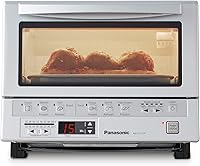
The Panasonic FlashXpress lists stainless steel as its material and has a tempered glass door. Its included components are a baking pan, crumb tray, and wire rack, so check the material and care information for the surfaces you plan to use.
The Cuisinart Toaster Oven Broiler has a nonstick interior. If you prefer to avoid nonstick surfaces, this is a reason to compare its model-specific details with other ovens before choosing it.
These options are not Breville models. They show why it helps to compare each oven's stated materials and interior finish instead of assuming a brand-wide answer.
Can liners reduce contact with the oven interior?
A liner may separate food from a tray, but only use one when your oven's manual permits it. Incorrect placement can interfere with airflow or put material too close to heating elements.
Check whether the manual allows foil, parchment, or other liners, and where they can be placed. Don't cover vents or the crumb tray unless the instructions say to do so.
Our guide to how to use a Breville toaster oven covers setup and everyday use. For liner placement and material choices, read Can You Use Liners in a Breville Toaster Oven?.
How do cleaning and wear affect your choice?
Follow the model's cleaning instructions and inspect coated surfaces for damage. Abrasive pads or unapproved cleaners can harm a finish, while crumbs and grease can collect around the tray and heating elements.
Unplug the oven and let it cool before cleaning, as directed by the manual. Use only the tools and cleaners it allows, and don't scrape a coating to remove stuck food.
See how to clean a Breville toaster oven for a model-aware cleaning routine. If you're choosing accessories, check the best Breville toaster oven accessories guide and confirm each item suits your oven.
A damaged surface deserves attention. Check Breville's guidance before cooking in an oven with peeling or flaking material, and replace an accessory if its finish is coming off.
What should you ask Breville before buying?
Ask about the exact model number and the specific material or chemical you want to verify. A focused question makes it easier to get an answer that applies to the oven you're considering.
You can ask:
- What material is used on the oven's interior walls and floor?
- Does this model have a nonstick coating, and what is its composition?
- What are the rack, tray, and included pan made of?
- Are there limits for foil, parchment, or other liners?
- What temperature and cleaning instructions apply to coated parts?
Keep the model number and manual handy. If you're weighing countertop cooking against a full-size oven, our guide to whether a toaster oven or an oven is better can help you compare the practical tradeoffs.
How can you find the right Breville model for your needs?
For the question “is Breville toaster oven non toxic,” the safest buying decision starts with the exact model's material and coating information. Check the interior, trays, racks, and care instructions, then ask Breville about any detail that remains unclear.
Choose a model whose documented surfaces and use instructions fit your preferences. If a door or accessory needs repair, check the instructions for Breville toaster oven door spring replacement before attempting work.
To understand the appliance category, see what a countertop toaster oven is. The model number and its own manual are the best starting points for material questions.
Frequently asked questions
Are Breville toaster ovens PFOA-free?
Check the materials and coating information for your exact Breville model. A statement about one chemical does not describe every material in the oven, and it does not answer whether other coatings or components are present.
If the information is unclear, ask Breville about that model before buying.
Do Breville toaster ovens have nonstick interiors?
Interior materials can vary by model, so check the manual and model-specific product information. Look for the exact wording about the interior surface, including whether it is nonstick, and follow the cleaning and cookware guidance.
Don't assume every Breville oven uses the same finish.
Is stainless steel safer than a nonstick toaster oven interior?
The material name alone doesn't show how an entire oven performs or what other parts contact food. Compare the full interior and accessory details for the models you're considering, then follow their temperature, cookware, and cleaning instructions.
Ask the manufacturer about any material you can't identify.
Can I put foil or a liner in a Breville toaster oven?
Only use foil or a liner if the manual for your exact model allows it and explains where it can go. A liner can block airflow or contact heating elements if placed incorrectly.
Check our guide to Breville toaster oven liners before using one.