How to Choose a Low Wattage Toaster Oven for an RV
Choose a low wattage toaster oven for an RV by matching its wattage to your campsite’s available power and the appliances you’ll run at the same time. Then check whether its cooking space fits your usual meals and its dimensions fit your counter.
On this page (6 sections)
A low wattage toaster oven for an RV should fit within the power available at your campsite, while still having enough cooking space for your meals. Check its wattage, what else shares the circuit, and whether the oven fits your counter with room to ventilate.
Start with your campground’s electrical supply and your RV’s guidance, rather than choosing by oven size alone. A small appliance can still exceed the power you have available when other high-draw devices are running.
How do you choose a low wattage toaster oven for an RV?
Choose by electrical load first, then cooking capacity and counter fit. An oven’s wattage tells you how much power it can draw while heating, but the total load also depends on other appliances on the circuit.
Check the rating on the oven itself or in its manual. Compare it with the available supply and the limits for your RV’s outlet and circuit; if you’re unsure how those limits apply, ask the campground or a qualified RV electrician.
Make a list of what you may use at the same time, such as an air conditioner, microwave, coffee maker, or electric water heater. Leave a margin for other loads instead of planning to run everything at the maximum.
If you’re comparing models, our best low wattage toaster oven guide can help narrow the options. For broader advice on using less power, see our best energy efficient toaster oven picks.
What wattage toaster oven can an RV run?
The safe wattage depends on your available electrical supply and other loads, so there isn’t one number that works for every RV. Confirm your campsite hookup, RV system limits, outlet rating, and appliance instructions before using the oven.
Wattage is a useful comparison point, but it doesn’t tell you whether a particular setup can support the oven alongside other devices. For example, a circuit with an air conditioner already running has less capacity for another heating appliance.
The oven may draw power differently as it heats and maintains temperature. Use the manufacturer’s rating as a planning figure, and follow your RV’s electrical guidance if it gives specific limits or instructions.
For a quick explanation of appliance ratings, see how many watts a toaster oven uses. If your campsite power is limited, avoid running multiple high-draw appliances at once.
Does lower wattage always mean a better RV oven?
Lower wattage can make it easier to fit an oven into a limited electrical budget, but it isn’t the only factor to compare. Check whether the oven has enough room for the portions and cookware you use.
A smaller cooking space can suit toast, reheating, or a single small meal.
A larger oven may fit more food, but can take up more counter space and may have a higher power rating. Compare each model’s wattage, interior capacity, and outside dimensions together.
If you want to understand the basic appliance type before comparing models, read what a countertop toaster oven is. Its size and controls can affect how well it fits your routine, while its wattage still needs to match your RV setup.
Which toaster oven features matter in an RV?
Prioritize a suitable wattage, useful cooking capacity, and a footprint that fits your counter. Timers, removable trays, and clear controls can also make an oven easier to manage in a compact space.
Measure the counter where you plan to use the oven. Include space around it for ventilation, a safe work area, and any clearance required by the manual; don’t assume an appliance can sit flush against a wall or cabinet.
Consider what you cook most often. A four-slice oven may suit toast and simple reheating, while a larger model may be more useful for family portions if your electrical supply can support it.
Also plan how the oven will be stored or secured during travel. Follow the RV and oven manuals, and don’t operate an appliance while the vehicle is moving.
BLACK+DECKER TO1313SBD Toaster Oven
The BLACK+DECKER TO1313SBD has a compact exterior measuring 14.5 x 10.8 x 8.8 in and a 10-liter capacity. Its curved interior fits a 9-in pizza or 4 slices of bread.
It offers baking, broiling, toasting, and a warm setting, with a 30-minute timer and stay-on option. The maker recommends a 10-minute preheat for consistent cooking.
The product information here doesn’t include a wattage figure, so check the oven’s label or manual before deciding whether it fits your RV’s power supply. Its exterior gets hot during use, and the maker advises leaving food and bakeware at least 1½ in from the top heating elements.
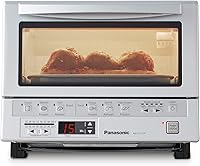
Panasonic FlashXpress Toaster Oven Countertop
The Panasonic FlashXpress is a 4-slice oven with a 1300-watt rating and outside dimensions of 12 x 13 x 10.2 in. Its compact footprint may fit a smaller counter, but confirm your RV circuit can support its rated draw.
It has six one-touch cooking options, manual temperature control, and a timer. Panasonic says its infrared heating design needs no preheat, which may help reduce time spent waiting before cooking.
The included baking pan, crumb tray, and wire rack provide options for common countertop-oven tasks. Leave room for safe use and follow the manual’s setup and clearance instructions.
Nuwave Bravo 30 QT Smart Air Fryer
The Nuwave Bravo is a 30-quart countertop oven with four rack positions, digital controls, and a temperature probe. Its larger capacity can suit people who cook more than toast or snacks, but its 20-in width and 20.8-pound weight make counter fit important.
The oven has preset cooking functions for tasks including air frying, baking, broiling, roasting, and toasting. The available product information here doesn’t include its wattage, so check its label or manual and compare that rating with your RV’s available power.
This model may be more oven than you need if you mainly toast bread or reheat small portions. Measure your counter and plan where it will go when not in use.
How can you check your campsite’s electrical limits?
Check the campground supply, RV guidance, outlet rating, and appliance rating together before connecting a toaster oven. A hookup’s advertised capacity doesn’t mean every outlet or circuit inside the RV can support the same load.
- Find the electrical limits for your campground hookup and RV.
- Check the oven’s wattage on its label or in its manual.
- Identify which other devices share the circuit or may run at the same time.
- Follow the lower applicable limit and leave room for other loads.
- If the labels or instructions aren’t clear, ask the campground or a qualified electrician.
Don’t rely on an extension cord unless the oven and RV instructions allow one, and use only a cord with the proper rating. Stop using the oven if a breaker trips, a cord or plug becomes hot, or you notice damage.
How should you compare power use and cooking needs?
Compare rated wattage, cooking space, and your usual cooking time. A lower wattage number can help with a tight power budget, while enough interior room can prevent you from needing several cooking rounds.
Think through a typical meal. If you’ll only toast bread or reheat one portion, a compact oven may cover your needs; if you cook for several people, a larger capacity may be more useful if your hookup allows it.
You can also weigh the oven’s role against your RV’s existing appliances. A countertop oven may make sense for some meals, while an oven in the RV may be more practical for others; our guide to whether to use a toaster oven or a regular oven walks through that choice.
For other countertop oven sizes, see NuWave Bravo oven sizes. Compare the exact model’s rating and dimensions with your campsite and counter before choosing.
What should you check before cooking?
Before you cook, confirm the oven is stable, the power setup is suitable, and the required clearances are open. Follow both the oven manual and your RV guidance.
Keep the oven on a level, heat-safe surface away from curtains, paper, and other items that can burn. Don’t cover vents or place cookware where it can touch heating elements.
Secure the oven for travel and unplug it before storing, if the manuals recommend that. Check that the cord and plug are in good condition, and don’t use damaged electrical equipment.
Which low wattage toaster oven should you choose for an RV?
Pick an oven whose rated wattage fits your available circuit with other planned loads, then choose the smallest capacity that handles your usual meals. Compare the best toaster oven for RV use if you want options aimed at compact travel setups.
The Panasonic’s 1300-watt rating gives you a number to compare against your RV’s power limits. The BLACK+DECKER offers a compact footprint and 4-slice capacity, while the larger Nuwave Bravo calls for careful checks of both counter space and power before you consider it.
Measure your counter, confirm the electrical limits, and use the appliance only as its instructions allow. That gives you a practical way to balance campsite power with the oven capacity you’ll actually use.
Frequently asked questions
What wattage toaster oven can I use in an RV?
Choose a toaster oven whose wattage fits the power available at your campsite after accounting for other appliances on the same circuit. Check the appliance label or manual for its rated wattage, then follow your RV and campground guidance for total loads.
Leave a margin instead of planning to run at the limit.
Can I use a toaster oven in an RV?
You can use a toaster oven in an RV when the appliance is approved for the available power and your RV setup allows it. Check the campground supply, RV electrical system, outlet rating, and the oven’s wattage.
Keep the oven on a stable, heat-safe surface with the ventilation space its manual requires.
Does a smaller toaster oven use less power?
A smaller oven may have a lower rated wattage, but size alone does not tell you its electrical draw. Compare the wattage on each model’s label or manual.
Also consider how long you’ll cook and whether you can run other appliances at the same time.
What else should I check before using an oven in an RV?
Check the oven’s wattage, the outlet and circuit limits, and which other appliances may run at the same time. Measure the counter and ventilation space, secure the oven for travel, and follow the RV and appliance manuals.
Stop using it if a breaker trips, a cord gets hot, or you notice damage.