What Is a Toaster Oven Made Of? A Closer Look
Breaking Down the Core Components of a Toaster Oven
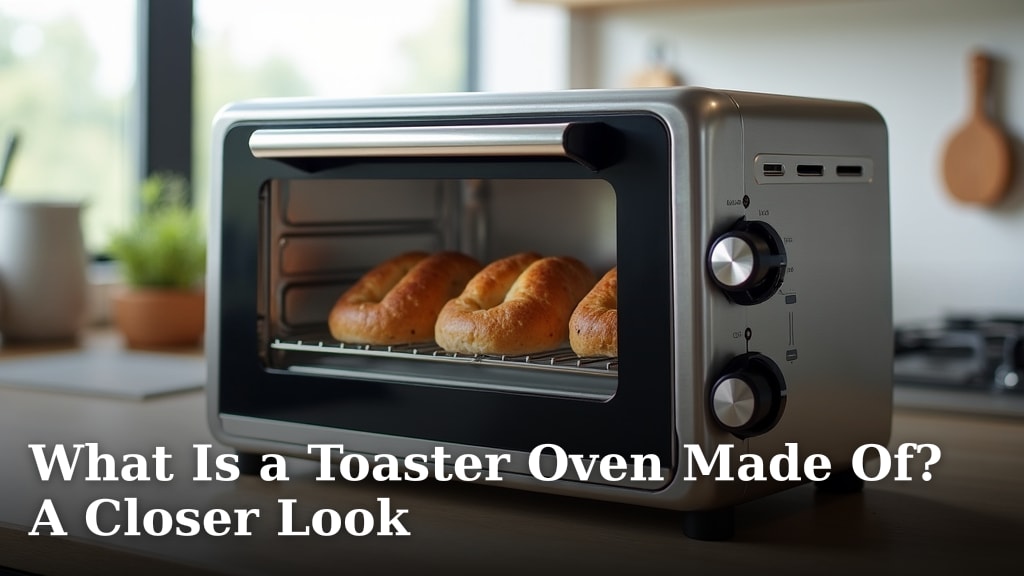
To understand your toaster oven, you have to look past the brand name and see the parts that make it work. Think of it like a mini kitchen within your kitchen. It’s a small box that gets very hot, on purpose, to cook your food. We found that while designs vary, the essential building blocks are surprisingly consistent across most models.
Here’s what’s actually inside that countertop appliance you use for bagels and chicken nuggets.
The Heating Elements: The Heart of the Appliance
Without heat, a toaster oven is just a small, expensive cabinet. The heating elements are the most critical part. They convert electrical energy into the heat that toasts your bread and bakes your cookies. There are two main types you’ll encounter.
Quartz vs. Nichrome: What’s the Difference?
The most common elements are made from a nichrome wire alloy. This wire is coiled inside a protective metal or ceramic tube. When electricity runs through it, it glows red-hot and radiates heat. Quartz elements are a newer alternative. They use a quartz tube filled with an inert gas. When heated, the gas emits infrared heat.
We found that the difference matters for performance. Quartz elements heat up and cool down much faster. This can mean quicker preheating. Nichrome elements are known for their durability and even, long-lasting heat. Many experts say the choice often comes down to preference for speed versus consistent, gradual heat.
| Heating Element Type | Main Feature | Common Advantage |
|---|---|---|
| Nichrome | Metal alloy wire in a tube | High durability and even heat distribution |
| Quartz | Quartz tube with inert gas | Faster heat-up and cool-down times |
Insulation: Keeping Heat Where It Belongs
You don’t want the outside of your toaster oven to feel like the surface of the sun. That’s where insulation comes in. The space between the inner cooking chamber and the outer metal shell is filled with a special material. Its job is simple: keep the heat inside and your kitchen outside comfortable.
The most common insulation is fiberglass or ceramic fiber. These materials are excellent at trapping heat. Good insulation means two things for you. First, your oven uses energy more efficiently. Second, the controls and exterior stay cool enough to touch safely. A poorly insulated oven wastes energy and can be a burn risk.
The Door and Glass Window
The door isn’t just a lid. It’s a key part of the oven’s system. Most doors are made with two layers of tempered glass. This creates an air gap that helps insulate. It also lets you see your food without opening the door and losing all that precious heat.
You’ve probably noticed the handle stays cool. That’s by design. Handles are made from heat-resistant plastic like phenolic. They are attached with a gap or spacer. This prevents the heat from conducting from the hot door to where your hand touches it.
The Crumb Tray and Interior Surfaces
The inside of your toaster oven takes a beating. It has to withstand high temperatures and cleaning wipes. The interior walls and the crumb tray are usually coated with a non-stick enamel. This coating helps with cleanup, preventing food from cementing itself to the metal.
The crumb tray itself is often made of stainless steel or enameled steel. Its job is to catch all the bits of toast and cheese that fall. A removable tray makes this task easy. Pull it out, dump it, and wipe it clean. A study from NSF International emphasizes that regular cleaning of these components is essential for preventing grease fires.
Controls, Electronics, and Safety Features
Under the knobs or behind the digital display is the brain of the operation. A simple toaster oven might have a basic thermostat and a timer. More advanced models have circuit boards that manage precise temperatures and cooking modes.
Safety is built into these systems. A common feature is an auto-shutoff timer. Another is a thermal fuse. This small component acts as a failsafe. If the oven overheats beyond a safe limit, the fuse will permanently break the electrical connection. We found this is a key safety requirement from testing laboratories like UL (Underwriters Laboratories).
Why Does Toaster Oven Material Quality Matter?
You might wonder if this deep dive into parts is worth your time. It is. The materials directly affect how long your oven lasts, how well it cooks, and how safe it is. A cheap, flimsy element will burn out quickly. Poor insulation leads to hot spots and uneven cooking.
Think of it as an investment. A toaster oven made with quality components will serve you well for years. It will also perform more reliably, giving you perfectly toasted sandwiches and roasted vegetables every time.
Your Toaster Oven Buying Checklist: Material Edition
Next time you’re shopping, you can look beyond the color and brand name. Use this checklist to evaluate the build quality.
- Feel the weight: A heavier oven often means more metal and better insulation.
- Check the door: Does it feel solid? Open and close it. It should move smoothly and not rattle.
- Look inside: Inspect the interior coating. It should look even and smooth, not rough or flaking.
- Test the controls: Knobs should click securely. Buttons should feel responsive, not cheap and loose.
- Find the crumb tray: It should be easy to access and slide out from the front, not the back.
- Read the manual: Look for mentions of safety certifications like UL or ETL on the specification sheet.
Putting It All Together
Your toaster oven is a smart combination of simple parts. Each component, from the glowing quartz element to the insulating air gap in the door, has a job. Understanding these parts helps you choose a better product and use it more safely.
You now know the difference between a nichrome coil and a quartz tube. You see why that crumb tray isn’t just a convenience, but part of a clean, safe system. This knowledge turns you from a casual user into an informed owner. You can make decisions based on what will last and what will perform best in your home.
Conclusion
Now you see your toaster oven isn’t just a simple box. It’s a carefully assembled mix of **specialized materials**. From the **nichrome or quartz elements** that create the heat to the **fiberglass insulation** that contains it. Every part, including the **cool-touch handle** and **non-stick interior**, has a specific job. This knowledge helps you look past marketing and judge an appliance by its actual build. It’s the difference between a unit that heats unevenly and one that lasts for years. So, next time you’re shopping, use this insight. **Open the door, check the weight, and locate the crumb tray**—your future self will thank you for choosing quality.
Frequently Asked Questions
Is a stainless steel toaster oven better than one with a non-stick interior?
It depends on your priority. **Stainless steel** is highly durable and easy to clean but can stain with high heat. A **non-stick enamel coating** makes cleanup much easier for everyday spills and splatters. We found most modern toaster ovens use a high-quality enamel that is both durable and functional for most households.
What is the main difference between quartz and nichrome heating elements?
The core difference is their **response time**. **Quartz elements** heat up and cool down very quickly, which can mean faster preheating. **Nichrome elements** are known for slower, more **even heat distribution** and long-term durability. Neither is universally “better”—it often comes down to whether you prefer speed or consistent, gradual heat.
Why does my toaster oven get so hot on the outside?
A very hot exterior usually points to **insufficient insulation** between the inner chamber and outer shell. Quality models use **fiberglass or ceramic fiber** to trap heat inside. This not only keeps your kitchen cooler but also improves energy efficiency. If the outside becomes uncomfortably hot, it may indicate lower-quality insulation materials were used.
Are the non-stick coatings inside toaster ovens safe?
Yes, the non-stick coatings used in reputable toaster ovens are designed to be **food-safe at high temperatures**. These are typically **vitreous enamel** coatings. To ensure safety, always use the appliance as directed and avoid using sharp metal utensils inside, which can scratch the coating. Look for products meeting safety standards like UL or ETL certification.
How can I tell if a toaster oven is well-built just by looking at it?
Follow a simple checklist. **A heavier unit** often indicates more metal and better insulation. Check the **door seal**—it should close firmly without gaps. The **crumb tray** should slide out smoothly from the front. Finally, **controls should feel solid**, not loose or wobbly. These are quick indicators of overall material quality and construction.