Can You Put Aluminum Foil in a Toaster Oven?
Yes, you can use aluminum foil in many toaster ovens, but only when it stays flat, stays clear of heating elements, and follows your maker's rules. Foil that touches live elements or blocks airflow can short, overheat, or start a fire, so placement matters more than the foil itself.
On this page (10 sections)
- Can aluminum foil go in toaster oven use safely?
- Where should foil sit inside a toaster oven?
- What foil placement can cause a fire?
- How do manufacturer rules change foil use?
- Can you line a toaster oven tray with foil?
- How does foil affect toasting and baking results?
- Which products help you avoid foil problems?
- What should you check before each foil use?
- When should you skip foil and choose another method?
- How do you place a toaster oven to keep foil use safer?
Yes, you can use aluminum foil in many toaster ovens, but only when it stays flat, stays clear of heating elements, and follows your maker's rules. Foil that touches live elements or blocks airflow can short, overheat, or start a fire, so placement matters more than the foil itself.
That short answer covers the core question about whether aluminum foil in a toaster oven is safe. The details below explain where foil helps, where it creates risk, and when a real pan is the better tool.
Can aluminum foil go in toaster oven use safely?
Yes, foil use is usually safe when your manual allows it and the sheet cannot move, touch elements, or cover vents. The risk rises in small cavities, where a loose corner can reach a hot coil in seconds.
Keep foil on a level tray, folded neatly at the edges, and weighted by food or a pan. Do not let foil float up toward the top element when the fan runs.
If your manual uses words like "do not cover surfaces" or "do not place foil on oven floor," follow those limits. Those rules exist because blocked heat can damage the oven even when no fire starts.
Our overview of are toaster ovens safe explains why maker limits matter in compact cavities.
Where should foil sit inside a toaster oven?
Foil belongs on a removable tray or inside a pan, not loose on the oven floor. It should sit below food, stay within the tray edges, and leave space around the sheet for air to move.
Trim the sheet so it fits the tray without curling up the sides. Fold any extra length down flat, and press corners down firmly.
If the food is light, such as pastry, add a pan or rack above the foil to hold it in place.
Never wedge foil between the door and the frame, and never let it touch the glass. A sheet that shifts during cooking can slip into an element.
What foil placement can cause a fire?
Loose foil near a heating element is the main fire risk in a toaster oven. A corner can lift, touch a live coil, and create sparks or melted metal that drops onto food or the crumb tray.
Other risky placements include foil covering vents, foil blocking the crumb tray, and foil draped over a rack with free ends. Those setups can trap heat and allow crumbs to ignite.
If foil ever sparks, melts, or catches fire, turn off the oven and unplug it without opening the door right away. Wait for the unit to cool, then check our guide to toaster oven on fire for safe cleanup steps.
How do manufacturer rules change foil use?
Each maker sets rules for foil, pans, racks, and tray covers, and those rules override general advice. Some models allow foil on the baking pan, while others ban foil on any interior surface.
Look for words about "foil," "metal," "covers," and "crumb tray" rather than a single yes or no answer. A maker may allow a small sheet on a tray but ban foil that extends past the tray edge.
Keep the manual handy when you change racks or use a new pan. A cool touch toaster oven exterior does not change what foil can safely touch inside the cavity.
Can you line a toaster oven tray with foil?
Yes, you can line a removable tray with foil when your manual allows it and the foil stays flat on that tray. The sheet should not hang over the sides, cover the tray handle, or bunch near the door.
Cut the foil to the tray size, smooth it into the corners, and fold the edges down. Check that no corner can lift when the door opens or when air moves during toasting.
Lining a tray can make cleanup easier, but it does not make the tray heatproof. Thick foil can also change browning by reflecting heat, so check food a few minutes early.
Should you use a pan instead of foil?
A pan is often safer than foil because it has fixed walls and a set size. It holds food in place and keeps foil from curling into an element.
The Chicago Metallic 4-Piece Toaster Oven Bakeware Set includes a 9.5 x 6.25 inch baking pan, a 9.25 x 6 inch cooling rack, an 11 x 7 inch roast and cake pan, and a 6-cup muffin pan. Those sizes fit many compact cavities and nest together for storage.
Chicago Metallic says the set uses heavy-weight aluminized steel with a nonstick coating and is oven safe to 450F. That makes it useful for reheating, small cakes, muffins, and roasted vegetables without loose foil edges.
Measure your cavity before you choose any pan, including height for the door and space below the top element.
How does foil affect toasting and baking results?
Foil can change heat flow by reflecting heat and by blocking air under a tray. That can lead to pale bottoms, crisp tops, or hot spots near the edges.
Shiny foil under food may slow browning on the bottom, while foil placed above food can shield the top from direct heat. Many cooks use foil only on the tray for cleanup, then use a pan or rack for the food itself.
If you use foil to catch drips, keep it below a rack and away from the lower element. Leave gaps at the front and back so heat can circulate.
Which products help you avoid foil problems?
A rotating oven, a fitted bakeware set, and a larger roaster can each reduce the need for loose foil. Each one keeps food contained in a set space.
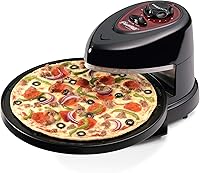
The Presto 03430 Pizzazz Plus Rotating Oven has a rotating tray, top and bottom heating elements that can be selected separately, and a timer that turns off the elements when time ends. Presto says it uses a removable nonstick baking pan and saves as much as 60% in energy compared with a conventional oven.
That design helps when you want even baking without lining a loose tray. The rotating tray turns food continuously, and the pan lifts out for cleaning and storage.
The NESCO 4816‑14 Electric Roaster Oven for Everyday has a 6-quart porcelain coated steel cookwell and a temperature range of 200F to 450F. NESCO says it can roast, bake, cook, steam, and serve, with a Circle of Heat heating design for even cooking.
That larger cookwell suits casseroles, roasted chicken, and one pot dishes when a toaster oven tray feels too small.
What should you check before each foil use?
Check the manual, the element clearance, and the tray fit before you turn the oven on. A quick check takes less time than cleaning melted foil or replacing a damaged element.
Confirm that foil stays inside the tray, that no corner can lift, and that vents remain open. Look at the top element with the door open, since that is where loose foil often makes contact.
Also confirm that the foil type suits the heat level. When a sheet shifts during a test run, switch to a pan for that oven.
After cooking, let the tray cool before you pull foil out. Hot foil can stick to food, and a warped sheet can scratch a pan or tray.
If you plan to store food in the oven for later use, our guide on should i unplug toaster oven after use covers the next step.
When should you skip foil and choose another method?
Skip foil when your manual bans it, when the sheet cannot stay flat, or when the cavity is too small for safe clearance. A fitted pan, a rack, or a dedicated tray usually solves the same task with less risk.
Skip foil over the oven floor, under the crumb tray, and around vents. Also skip foil when you need high top heat for crisping, since a sheet can block the heat you want.
Use a pan when food is juicy, cheesy, or likely to drip. Foil under a pan can shift, while a pan with walls contains drips.
For larger meals, a roaster cookwell can replace both foil and a shallow tray.
If you are choosing between appliances for small meals, our comparison of Is It Better to Use a Toaster Oven or an Oven? can help you decide which setup fits your kitchen. You can also learn what a countertop toaster oven means for size, heat, and placement before you buy more accessories.
How do you place a toaster oven to keep foil use safer?
Keep the oven on a level, heat safe surface with space on all sides for airflow. That space helps the oven hold steady heat and keeps foil and food from sitting near hot exterior walls.
Do not place a toaster oven above a range or under cabinets that trap heat. Our guide on toaster oven above range explains clearance risks when heat and grease rise into a small space.
Keep the cord, plug, and nearby towels away from the cavity opening. That habit matters even when you use a pan instead of foil.
For this foil question, the safest setup is simple: a level surface, clear vents, a fitted tray or pan, and foil that stays flat and inside that tray.
Frequently asked questions
Can aluminum foil go in a toaster oven?
Yes, foil can go in many toaster ovens when your maker allows it and the sheet stays secured away from heating elements. Never let loose foil touch hot coils, block vents, or cover the crumb tray.
If your manual bans foil, use a maker approved pan instead.
Can you line a toaster oven tray with aluminum foil?
You can line a removable tray only if the manual allows foil and the foil stays flat on that tray. It should not hang over edges, touch elements, or extend beyond the tray.
A fitted bakeware pan is often the safer choice for small ovens.
What happens if foil touches a toaster oven heating element?
Foil touching a live heating element can cause a short, sparks, melted foil, or a fire. Turn the oven off, unplug it, and let it cool before removing debris.
Do not restart the oven until you check the element and crumb tray for damage.
Is foil safe in a toaster oven air fryer combo?
Some combo models allow foil and some ban it, so the manual for your exact model controls the answer. Keep foil weighted flat, away from the top element and fan area, and out of the path of moving air.
When in doubt, use a pan sized for the cavity.