Cool Touch Toaster Ovens: What to Look For
A cool touch toaster oven should keep its outer surfaces safer to handle during normal use, but no countertop oven is automatically safe to touch everywhere. Check how the brand defines cool touch, where heat escapes, and whether the insulated design leaves enough cooking space.
On this page (11 sections)
- What does cool touch mean on a toaster oven?
- How does insulation affect a toaster oven?
- Which exterior surfaces need the most attention?
- What should you check before choosing a cool touch toaster oven?
- Are larger countertop ovens harder to keep cool?
- How should you use a cool touch toaster oven?
- Can insulation create new buying problems?
- What should you do if a toaster oven catches fire?
- Can aluminum foil affect heat and safety?
- How do you choose the best cool touch toaster oven?
- FAQ
A cool touch toaster oven should keep selected outside surfaces safer to handle during normal use, but it does not make the whole appliance cold or risk-free. The cooking chamber, racks, pan, door glass, vents and nearby counter can still become hot.
The useful question is not simply whether an oven says “cool touch.” Ask which surfaces stay cooler, how the oven releases heat, and whether the insulation changes the interior space or exterior size.
What does cool touch mean on a toaster oven?
Cool touch usually refers to an exterior surface that is designed to limit heat transfer during operation. It does not mean you can touch every part of the oven while it is running.
A brand may use the phrase for a door handle, housing, control area or several exterior panels. Those areas can have different temperatures, especially near the door, heating elements and ventilation openings.
Look for clear instructions that identify:
- Which surfaces are intended to stay cooler
- Whether the door or handle is included
- Where hot air exits
- How much space the oven needs around its sides and top
- Whether the oven needs a heat-resistant surface
- Which areas you must avoid during and after cooking
A cool exterior can reduce the chance of an accidental contact burn, but it does not replace careful placement. Read more about are toaster ovens safe before choosing a countertop location.
How does insulation affect a toaster oven?
Insulation helps limit heat transfer from the cooking chamber to the outside, but it can add bulk and may reduce the usable interior space. Compare the oven's outside dimensions with its cooking area, not one measurement alone.
Two ovens with similar exterior sizes can have different interior layouts. Thicker insulation may make the body wider or deeper, while a compact design may leave less room for a pan, rack or taller food.
Check these trade-offs before buying:
| Feature | What it may help with | What to check |
|---|---|---|
| Insulated outer housing | Less heat transfer to some outside surfaces | Which panels are covered by the claim |
| Cool touch handle | Safer handling of the door | Whether the door glass and frame still get hot |
| Ventilation openings | Releases heat and moisture | Where the hot air travels |
| Compact body | Takes less counter space | Whether your intended pan fits |
| Larger cooking chamber | Holds more food | Whether the outer shell needs more clearance |
Insulation does not tell you how fast food will cook. Heating power, element placement, controls, pan material and food thickness all affect results.
Which exterior surfaces need the most attention?
The door, vents and areas near the heating elements deserve the most caution, even on a toaster oven marketed as cool touch. These locations handle or release heat directly.
The handle may be easier to hold than the door glass, but do not assume the entire front panel stays cool. The top can also become hot if heat rises toward cabinets or shelves.
Leave space above the oven if the instructions require it. Do not store towels, paper, plastic containers or appliances on top while the oven is operating.
Controls also need care. A cool control knob or button area does not mean the cooking chamber has cooled.
Use the timer and automatic shutoff features correctly, then allow the oven and cookware to cool before cleaning.
What should you check before choosing a cool touch toaster oven?
Choose a model by matching its safety details, cooking space and daily controls to your kitchen. A cool touch claim is only useful if the oven also fits your counter, cookware and cooking habits.
1. Read the exact safety wording
Look for a clear description of the cool-touch area. A broad phrase can leave important details unanswered, such as whether the door, side panels or top are included.
If the wording is vague, treat the oven as hot on every exterior surface. That approach gives you a safer setup until the instructions provide more detail.
2. Measure the counter and clearances
Measure the available counter space, then compare it with the oven's outside dimensions. Add the required clearance around the body and make sure the door can open without hitting a wall or another appliance.
Check the outlet location and cord path as well. Keep the cord away from hot surfaces and avoid placing the oven where you must reach across it to use the controls.
3. Match the interior to your pans
A small oven may be easier to place but less useful if your baking pan does not fit. Measure the pan's outside rim, not only the cooking surface.
For small-batch baking, the Chicago Metallic 4-Piece Toaster Oven Bakeware Set includes a 9.5 x 6 in baking pan, a 9.25 x 6 in cooling rack, an 11 x 7 in roast/cake pan and a 6-cup muffin pan. The pieces are made from heavy-weight aluminized steel, have a nonstick coating, are oven safe to 450°F and nest for storage.
4. Check the controls and shutoff
A timer can help limit unattended cooking, but it does not remove the need to stay nearby. Confirm whether the timer only signals the end or also turns off the heating elements.
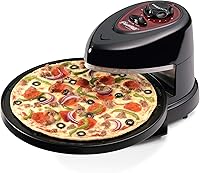
The Presto 03430 Pizzazz Plus Rotating Oven has a timer that signals the end of cooking time and automatically turns off the heating elements. Its top and bottom elements are separately controlled, and its rotating tray turns continuously.
For more detail on this control, see what is a toaster oven timer for.
5. Consider how heat leaves the oven
Vents protect the appliance by releasing heat and moisture. They can also warm the space behind, above or beside the oven.
Never cover a vent to make the outside feel cooler. Blocking airflow can change how the oven operates and may increase heat around the appliance.
Are larger countertop ovens harder to keep cool?
Larger countertop ovens usually need more counter area and may release more heat simply because they cook more food. Size alone does not prove that an oven has better or worse exterior insulation.
Compare the full body dimensions, clearance instructions and vent locations. A larger insulated body may suit your cooking needs, while a smaller oven may be easier to place but offer less room around the food.
The NESCO 4816‑14 Electric Roaster Oven has a 6-quart capacity, a porcelain-coated steel cookwell and a temperature range of 200°F to 450°F. It is designed for roasting, baking, cooking, steaming and serving, with side handles described as stay-cool.
Its size and cooking style differ from a small toaster oven. Use the same placement rules: provide the required clearance, keep the vents open and treat the cookwell and lid as hot during use.
For material context, read what is a toaster oven made of. Materials can explain why parts heat differently, but they do not replace the appliance's safety instructions.
How should you use a cool touch toaster oven?
Use a cool touch toaster oven on a clear, stable surface and handle only the parts identified for handling. Keep children away, use oven mitts for hot cookware, and wait for the appliance to cool before cleaning or storing it.
Follow these habits:
- Keep curtains, paper, towels and other flammable items away.
- Do not block vents or place objects on top.
- Use pans that fit without touching heating elements.
- Keep foil and other materials away from heating elements unless the instructions allow them.
- Use the door handle and controls as directed.
- Stay nearby while food cooks.
- Unplug the oven when it is cool if the instructions and your routine call for it.
- Clean spills after the appliance has cooled.
If you are unsure about unplugging, read should you unplug a toaster oven after use for the factors that affect that choice.
Never try to move a hot oven or hot roaster. Let the body, rack, pan and food cool first, then clean according to the care instructions for that appliance or cookware.
Can insulation create new buying problems?
Insulation can reduce heat transfer, but it may create practical trade-offs in size, weight and access. A cooler outside surface is not always the most important feature if the oven cannot fit your cookware or counter.
Consider these possible trade-offs:
- A thicker body may take more counter space.
- A compact interior may limit pan choices.
- More insulation can make the exterior feel safer while vents still release hot air.
- A larger oven may need more open space around it.
- A cooler handle does not make the door glass cool.
- A timer helps with shutoff, but it does not replace supervision.
- A nonstick pan can simplify cleanup, but it still needs careful handling when hot.
The best choice depends on the full setup. Measure first, then compare the safety wording with the food and pans you plan to use.
What should you do if a toaster oven catches fire?
If a toaster oven catches fire, turn it off and keep the door closed if you can do so safely. Unplug it only if you can reach the plug without touching flames or crossing a dangerous area.
Do not use water on an electrical or grease fire. Leave the area and call emergency services if the fire does not stop quickly or if smoke and flames are spreading.
Read what to do if your toaster oven catches fire before an emergency so you know where the oven sits, how to cut power safely and which exits remain clear.
Can aluminum foil affect heat and safety?
Aluminum foil can reflect or trap heat when it is placed incorrectly. Never let foil touch heating elements, block vents or line the oven in a way the instructions prohibit.
The foil's location matters more than the word “foil” alone. A loose sheet can move, contact an element or interfere with airflow.
Read can you put aluminum foil in a toaster oven for placement guidance before using it with a pan or food.
How do you choose the best cool touch toaster oven?
Choose the best cool touch toaster oven by checking the exact cool-touch surfaces, clearance needs, interior dimensions and timer behavior. Then compare those details with your counter, pans and usual meals.
Pick a compact design if counter space is your main limit, but confirm that your pans fit. Choose a larger cooking appliance if you need more room, while planning extra clearance and a safe way to handle larger hot cookware.
A cool exterior can make daily use easier, but the oven still needs careful placement and supervision. For any model, treat vents, glass, racks, pans and heating elements as hot until they have cooled.
FAQ
What is a cool touch toaster oven?
A cool touch toaster oven is designed to keep some exterior surfaces cooler during operation than the cooking chamber. The phrase does not mean every surface stays cool, so treat the door, vents, controls and nearby counter as heat-sensitive areas until the instructions explain otherwise.
Are cool touch toaster ovens safe to touch?
Cool touch toaster ovens may reduce contact heat on selected exterior surfaces, but they still contain hot heating elements, hot cookware and escaping heat. Use the handles and controls as directed, keep children away, and leave space around vents and the oven body.
Does insulation make a toaster oven cook more slowly?
Insulation does not automatically make a toaster oven cook more slowly, but it can change how heat is held and released. Cooking speed still depends on the heating elements, controls, food load, pan and selected setting, so follow the appliance instructions.
Where should a cool touch toaster oven sit?
Place it on a stable, heat-resistant surface with the clearances required by its instructions. Keep it away from curtains, paper, cabinets and other items that can be damaged by heat, and make sure vents are not blocked.
Frequently asked questions
What is a cool touch toaster oven?
A cool touch toaster oven is designed to keep some exterior surfaces cooler during operation than the cooking chamber. The phrase does not mean every surface stays cool, so treat the door, vents, controls and nearby counter as heat-sensitive areas until the instructions explain otherwise.
Are cool touch toaster ovens safe to touch?
Cool touch toaster ovens may reduce contact heat on selected exterior surfaces, but they still contain hot heating elements, hot cookware and escaping heat. Use the handles and controls as directed, keep children away, and leave space around vents and the oven body.
Does insulation make a toaster oven cook more slowly?
Insulation does not automatically make a toaster oven cook more slowly, but it can change how heat is held and released. Cooking speed still depends on the heating elements, controls, food load, pan and selected setting, so follow the appliance instructions.
Where should a cool touch toaster oven sit?
Place it on a stable, heat-resistant surface with the clearances required by its instructions. Keep it away from curtains, paper, cabinets and other items that can be damaged by heat, and make sure vents are not blocked.