Countertop Microwaves: The Complete Buying Guide
Countertop microwave ovens are best chosen by capacity, power and outside size, not by brand alone. A 0.7 cu ft model suits small reheating jobs, a 1.0 to 1.2 cu ft model suits larger plates and family use, and a combo model suits buyers who also want air fry or convection cooking.
On this page (10 sections)
- How do countertop microwave ovens differ from toaster ovens?
- What capacity countertop microwave oven do you need?
- How much power do countertop microwave ovens need?
- What controls and features are worth paying for?
- Can you put a countertop microwave in a cabinet?
- Which countertop microwave ovens suit small kitchens and offices?
- Which larger countertop microwave ovens suit family cooking?
- When is a combo countertop microwave oven worth it?
- How should you set up and care for countertop microwave ovens?
- Which countertop microwave ovens should you buy first?
Countertop microwave ovens are best chosen by capacity, power and outside size, not by brand alone. A 0.7 cu ft model suits small reheating jobs, a 1.0 to 1.2 cu ft model suits larger plates and family use, and a combo model suits buyers who also want air fry or convection cooking.
Start with the dishes you reheat most often. A mug, a small plate and a covered bowl need far less room than a casserole dish or a whole chicken.
Think about who will use the microwave each day. A single person reheating one plate needs a different cavity than a family saving leftovers for several people.
Consider drinks and snacks as well as meals. Many days the main job is warming coffee, soup or a frozen meal, and that pattern should guide your choice.
Then check the counter space you can give up every day. Outside size matters more than the number on the box when a cabinet door or backsplash gets in the way.
Measure width, depth and height in the exact spot. Leave room for the door to open, for your hand to reach the controls and for air to move around the vents.
Check plugs and outlets at the same time. A model that fits the space can still be awkward if the cord must stretch across a sink or a busy prep area.
Power deserves the same daily view. A 700 watt model suits light reheating well, while 1000 watts helps with larger portions and frozen foods.
Controls matter in a busy kitchen too. Clear presets, a readable clock and simple power levels are easier to use when your hands are wet or you are in a hurry.
Our score weighs specs, features and buyer feedback against what you are shopping for. We have compared the four models below by those same measures.
Care and cleaning also play a part in the choice. A smooth interior and a removable turntable make wiping splatters faster after a busy meal.
If you are still deciding between appliance types, our guide to what is a countertop toaster oven explains how the two differ in heat, speed and food results.
How do countertop microwave ovens differ from toaster ovens?
Countertop microwave ovens heat food with microwave radiation, so they reheat fast and keep food moist. Toaster ovens heat with elements and air, so they brown, crisp and bake more like a small oven.
Choose a microwave when your main job is reheating leftovers, warming drinks, cooking vegetables and making popcorn. Those tasks need speed more than browning.
A microwave also suits covered dishes and sauces. It heats from the inside out in a way that helps food stay soft rather than crisp.
Choose a toaster oven when your main job is toast, pizza, baked rolls and foods that should crisp on top.
A toaster oven suits foods you want browned on the surface. Heating elements and air give a dry heat that a microwave cannot match.
Many kitchens use both, because each one does a job the other does poorly. The microwave wins on speed, and the toaster oven wins on texture.
Space is the honest trade off with two units. A combo model can help, but it will be deeper and heavier than a standard microwave.
If you are weighing a microwave against a full oven for baked foods, read is it better to use a toaster oven or an oven before you decide.
A full oven still has room for large trays and long baking times. A countertop model suits small batches and quick jobs in a compact kitchen.
A combo microwave can narrow that gap. The TOSHIBA combo in this guide adds air fry, bake, broil and combi cooking to normal microwave use.
That added heat matters for crisping, but it also adds weight, depth and control complexity. Set up needs more thought, and cleaning takes a little more care.
For most buyers, the honest question is simple. Do you reheat more often than you bake, or bake more often than you reheat?
What capacity countertop microwave oven do you need?
Buy capacity for your largest normal dish, not for a rare best case. A 0.7 cu ft cavity fits small plates and single servings well, while a 1.0 to 1.2 cu ft cavity fits larger plates, covered bowls and casseroles with room for the turntable to turn.
Capacity also changes the outside size. The 0.7 cu ft models here measure about 17 to 18 inches wide, while the 1.2 cu ft TOSHIBA measures 20.6 inches wide.
Depth matters too, because a deep model can push a plate too far back under a cabinet.
Height matters when upper cabinets sit low over the counter.
Measure width, depth and height with a tape before you shop. Allow room for the door to open and for your hand to reach the controls.
Our countertop microwave dimensions guide walks through the full measuring process step by step.
If space is tight, a small portable microwave may fit a dorm, office or RV better than a full size model.
Do not assume a larger cavity always cooks better. A large cavity with low power can heat a small plate more slowly than a well matched small model.
Match cavity size to plate size first. Then match power to the foods you heat most.
Which plate sizes fit each capacity?
A 0.7 cu ft model usually suits plates up to about 10 inches, mugs and small bowls. It is a good fit for one person, a break room or a compact kitchen.
A 1.0 cu ft model gives more room for a 12 inch pizza plate or a casserole dish, depending on the turntable size and cavity shape.
A 1.2 cu ft model with a 12.4 inch turntable gives the most freedom for large plates and family portions.
Check turntable diameter, not just cubic feet. A wide turntable helps a round plate turn without catching the walls.
Square dishes can fit even when the turntable looks small on paper. Measure the dish corner to corner before you assume it will turn.
How much power do countertop microwave ovens need?
Choose 700 watts for light reheating and 1000 watts for larger or frozen foods. For a midrange option, compare 900-watt countertop microwaves.
Higher power usually reduces heating time, but it does not remove the need for stirring, turning and standing time.
At 700 watts, popcorn, drinks, vegetables and single servings heat well with a little patience.
At 1000 watts, a full dinner plate, soup or frozen meal usually heats faster and with fewer cold spots.
Power levels matter as much as top power. Ten power levels let you soften cheese, melt butter and defrost without cooking the edges to a crisp.
Look for defrost by weight and by time. Weight defrost helps with meat and frozen meals, while time defrost helps when you know the food and want control.
One touch presets help with common foods, but they are only a starting point. Large portions often need a stir and a second short burst.
Input power is not the same as microwave output power. The number you cook with is the output, such as 700 watts or 1000 watts.
If budget is your main concern, start with best countertop microwave under 100 dollars and compare power and size before you add features.
For a very low budget, read can you buy a new microwave under 50 to see what you give up at that level.
What controls and features are worth paying for?
Look for controls you will use daily, not features you will ignore. A clock, timer, child lock, interior light and clear display help every day, while specialty menus help only if you cook those foods often.
Touch controls look clean and are easy to wipe, but they need a clear press.
Button controls give a firmer feel and can help in a busy kitchen with wet hands.
Sensor cooking adjusts time and power from humidity. TOSHIBA says its sensor system adjusts cooking based on food humidity to reduce overcooking and undercooking.
Inverter cooking holds low power more steadily. That can help with chocolate, cheese and delicate reheating, so compare our best inverter microwave countertop picks if that matters to you.
A mute function helps in a shared home or office. An ECO mode can reduce standby power use.
A child lock can stop accidental starts, especially in homes with small children.
Defrost options deserve a close look. Time defrost is simple, and weight defrost needs you to know the food weight.
Keep warm and soften modes can help with bread, butter and leftovers, but check that the model you choose actually has them.
For buyers who want simple controls, our best microwave for seniors guide focuses on easy to read panels and clear presets.
Presets, sensors and one touch start
Presets for popcorn, potato, pizza, beverage and frozen vegetables save button presses. They do not guarantee a perfect result for every brand of food.
Sensor reheat can be useful for leftovers, because it reacts to steam from the food.
One touch start for 1 to 6 minutes helps when you just need a quick burst at full power.
Express cooking buttons, such as 30 seconds, help when you need a small top up.
Memory functions let you save a favorite time and power mix. That helps if you heat the same food the same way most days.
Check the preset list before you buy. Six presets cover the basics, and more presets only help if you use them.
Can you put a countertop microwave in a cabinet?
Put a countertop microwave in a cabinet only if the maker approves enclosed use for that model. Most countertop models need ventilation gaps, and blocking the vents can cause heat to build up.
Check the manual for required space on the top, sides and back. Use those gaps as a minimum, not as a target to squeeze below.
Measure the inside opening before you buy. A model that fits on the counter may not fit through or inside the cabinet.
Measure width, depth and height with the door open as well as closed. A door that is fine shut can still hit a frame when you need to load a wide plate.
Leave room to open the door fully. A door that hits a cabinet frame makes loading and cleaning harder every single day.
Keep the vents clear of towels, paper goods and stored food. Heat needs a path out, and blocked vents can make the unit run hotter than it should.
Do not stack items on top of the microwave unless the maker says it is safe to do so. Weight and heat on top can block airflow and make the surface harder to clean.
Our full guide to countertop microwave in cabinet use covers clearances and safer setups.
If the microwave will sit in a cabinet, measure depth with the door closed and with the door open. Check that a large plate can go in and out without tilting or scraping the sides.
Also check that the plug and outlet remain reachable without moving the unit. You should be able to unplug it for cleaning without dragging it across the counter.
Think about light and visibility too. A deep cabinet can hide the interior light, so check that you can see the food through the door.
Steam and splatter build up faster in a closed space. Wipe spills soon after cooking, and keep the door seal clean so it closes without force.
A microwave rack or riser can help in some kitchens, so compare our best countertop microwave rack picks for height and stability.
A rack can lift the unit for easier access and airflow. Check that it is level, sturdy and rated for the weight of the model you plan to use.
Which countertop microwave ovens suit small kitchens and offices?
Small kitchens and offices need a compact footprint, 700 watts and simple presets. A 0.7 cu ft model can handle single servings without taking over the counter.
Two models in this guide fit that role well, and they differ in finish, controls and door style.
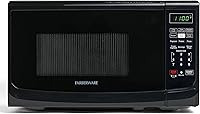
Farberware 0.7 cu ft for small space reheating
The Farberware Countertop Microwave Oven measures 17.75 x 12.91 x 10.1 inches and weighs 22.7 pounds.
It gives you 700 watts, 10 power levels and multi stage cooking.
Its six one touch options include popcorn, potato and pizza, with defrost by weight or by time.
A clear LED display shows a kitchen timer and clock, and interior lighting helps you watch the food.
A child safety lock adds security in a shared home.
Choose it for a home kitchen, dorm or office where space is tight and heating jobs are small to medium.
Skip it if you often reheat large family plates or casseroles that need a wider turntable.
Its stainless steel or painted metal build and easy to clean interior suit daily use.
BLACK+DECKER 0.7 cu ft for push button access
The BLACK+DECKER Countertop Microwave Oven measures 17.3 x 13 x 10.2 inches and weighs 20.2 pounds.
It also gives you 700 watts and 10 power levels, with a clock and kitchen timer.
Pre programmed buttons cover popcorn, potato, pizza, frozen vegetable, beverage and dinner plate.
A large LED display, interior light and child safety lock cover the daily basics.
A push button door release makes access simple, and the removable 10 inch glass turntable is easy to clean.
Choose it for a stainless steel look and simple button presets in a small kitchen or break room.
Skip it if you need sensor cooking or a larger cavity for family sized dishes.
Its 30 seconds express cooking helps with quick top ups without setting a full program.
Which larger countertop microwave ovens suit family cooking?
Family cooking needs a wider cavity, a larger turntable and 1000 watts. Those three details help large plates heat more evenly and give you room for covered dishes.
The TOSHIBA 1.2 cu ft model below is the larger standard microwave in this guide.
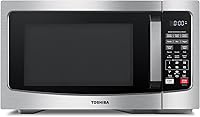
TOSHIBA 1.2 cu ft for larger plates and sensor reheating
The TOSHIBA Countertop Microwave Oven measures 20.6 x 14.6 x 11.8 inches and weighs 31.1 pounds.
It gives you 1000 watts of microwave output power and 10 power levels.
A 12.4 inch glass turntable fits larger plates and covered bowls more easily than a 10 inch turntable.
Smart sensor technology adjusts cooking time and power based on food humidity, according to TOSHIBA.
Six preset menus cover popular foods, with one touch start for 1 to 6 minutes at full power.
Defrost by weight or by time helps with frozen foods, and a mute function plus ECO mode cover quiet use and standby power.
Choose it for family reheating, soups and larger frozen meals where a small cavity would slow you down.
Skip it if your counter width is under about 21 inches or your cabinets sit low.
Its black stainless steel finish suits many kitchens, but the wider body needs a real plan for placement.
For more on this brand, see best toshiba countertop microwave and best toshiba small countertop microwave.
When is a combo countertop microwave oven worth it?
A combo model is worth it when you want microwave speed plus air fry, bake or broil in one unit. It can replace a separate toaster oven for many buyers, but it is heavier and deeper than a standard microwave.
The combo below uses microwave radiation, convection heat and a grill element.
That mix lets you reheat quickly on microwave mode, then crisp or brown on air fry or broil mode.
Convection and bake modes help with rolls, casseroles and baked goods that need heat from the air.
A 12.4 inch turntable can fit a whole roasted chicken, a 12 inch pizza and an 8 x 4 inch casserole, according to TOSHIBA.
Odor removal mode can help after strong smelling foods, and a two step child lock helps prevent unintended use.
Choose it if counter space is limited and you cook both reheated and baked foods.
Skip it if you only need reheating, because a standard model is simpler and easier to place.
TOSHIBA Air Fryer Combo 1.0 cu ft for multi function use
The TOSHIBA Air Fryer Combo Microwave measures 20.6 x 16.4 x 11.8 inches and weighs 39.2 pounds.
It gives you 1000 watts of microwave output power in a 1.0 cu ft cavity.
Its 8 in 1 functions include microwave, air fry, bake, broil, combi, low temp, odor removal and defrost.
Knob and touch controls give you two ways to set power and time.
Programs include air fry, defrost, keep warm, reheat and soften.
Choose it for a small kitchen where one unit must reheat, crisp and bake.
Skip it if you want the lightest model or the shallowest depth for a tight counter.
For more multi function options, compare our best countertop microwave convection oven combo guide.
Depth is the key trade off here. At 16.4 inches deep, it needs more counter room than the standard 1.2 cu ft model.
Weight is the second trade off. At 39.2 pounds, it is not a unit you will move often.
How should you set up and care for countertop microwave ovens?
Set up the microwave on a flat, level surface with air gaps and a clear door swing. Leave space around the vents, keep the plug reachable and keep the turntable seated before you cook.
Wipe spills soon after they happen, with a damp cloth and mild soap.
Use microwave safe plates and bowls, and compare our best good microwave safe plates guide if you need new dishes.
Cover food with a vented cover to reduce splatter, and see our best microwave splatter cover picks for simple options.
A steamer basket can help with vegetables, so check our best small microwave steamer guide for compact choices.
Replace a cracked or chipped turntable plate right away, and use our best microwave replacement turntable guide to match size and shape.
Clean the interior with care. Warm water and a mild cleaner help with splatter, and avoid harsh scrubbing that can damage the surface.
Keep the door seal clean and free of food crumbs. Close the door gently and check that it latches without force.
Do not run the microwave empty. Always place food or a cup of water inside before you start.
If you buy a stainless steel model, wipe it with the grain to reduce streaks.
For brand specific picks, see best samsung countertop microwave, best countertop microwave lg and best countertop microwave frigidaire.
Which countertop microwave ovens should you buy first?
Buy the Farberware for compact 700 watt reheating, the TOSHIBA 1.2 cu ft for family portions, and the TOSHIBA combo for multi function cooking.
Pick the Farberware if you need a 0.7 cu ft model with 10 power levels and simple one touch presets.
Pick the BLACK+DECKER if you want a similar 0.7 cu ft size with a push button door and stainless steel finish.
Pick the TOSHIBA 1.2 cu ft if you reheat large plates often and want sensor reheating with 1000 watts.
Pick the TOSHIBA Air Fryer Combo if you want one unit to microwave, air fry, bake and broil.
For more brand comparisons, read best panasonic countertop microwave and best sharp countertop microwave.
For a stainless finish, compare our best stainless steel microwave countertop guide before you choose.
For value focused shopping, also check best microwave for the money and small microwave made in usa if origin matters to you.
Measure your space, match capacity to your largest dish, and choose power for your most common food. Those three steps will point you to the right countertop microwave ovens for your kitchen.
Frequently asked questions
What size countertop microwave oven should I buy?
Buy 0.7 cu ft for single plates and small kitchens, and buy 1.0 to 1.2 cu ft for larger plates, casseroles and family reheating. Check outside width, depth and height against your counter and cabinets before you choose capacity.
How many watts does a countertop microwave need?
700 watts handles routine reheating and popcorn, while 1000 watts usually heats larger portions faster and more evenly. Power matters most when you reheat full dinner plates, soups and frozen foods rather than drinks and snacks.
Can I put a countertop microwave in a cabinet?
Only do so if the maker approves that exact model for cabinet use and you can keep the required ventilation gaps. Measure the cabinet opening, leave air space on the sides and top, and keep the vents clear of stored items and heat.
Are sensor and inverter controls worth paying for?
Sensor controls can adjust time and power from food humidity, which helps with reheating leftovers. Inverter controls can hold low power more steadily, which helps with delicate foods, but simple models work well for basic reheating.
What is the difference between a microwave and a toaster oven?
A microwave heats food quickly with radiation and is best for reheating, while a toaster oven uses heated air for browning, baking and toasting. Many buyers choose one for speed and add the other only if they need browning or baking.