How to Choose a Small Microwave Without a Turntable
A small microwave without a turntable is best when a flat cavity fits rectangular dishes, turns food by hand, and keeps sides clear for safety. Choose usable width and depth first, then power and controls, and confirm ventilation before installation.
On this page (11 sections)
- What does small microwave without turntable mean for daily use?
- How do you compare usable cavity size, not just cubic feet?
- How do you check heating without rotation?
- What power level suits a small microwave?
- Which of these three models fits your needs?
- How do you plan installation for a small microwave?
- How do you set up and care for a flatbed cavity?
- What foods suit a small microwave without a turntable?
- When should you choose a turntable model instead?
- How should you decide between 0.7, 0.9 and 1.2 cu ft?
- What is your final decision rule for a small microwave without a turntable?
A small microwave without a turntable works best when you need a flat floor for rectangular dishes and you are willing to turn food halfway. The cavity shape matters more than the cubic feet label, because corners and walls limit what fits.
You also need to check how the oven heats without rotation. Sensor controls, power levels and a clear manual routine can reduce cold spots, but they do not move food for you.
Our countertop microwave ovens guide covers the wider buying choices.
This guide compares three countertop models by usable cavity size, power and setup needs. It also shows when a turntable model in this group is the safer pick.
Use it to match the oven to your dishes, counter space and habits.
What does small microwave without turntable mean for daily use?
It means the food sits on a flat cavity floor and you move it yourself during cooking. That design frees corners for rectangular dishes, but it puts the work of even heating on you.
A turntable model moves food through hot and cool zones automatically. A flatbed model keeps food in one place unless you stir, rotate the dish or turn pieces over.
That trade-off is the core choice.
For mugs, soup and single plates, a turntable is simpler. For a rectangular container, a casserole dish or a wide plate that wastes corner space, a flatbed can fit more with less wasted room.
Rule: choose a flatbed when your common dish is rectangular and you will turn it halfway. Choose a turntable when you often reheat drinks or round plates and want less checking.
How do you compare usable cavity size, not just cubic feet?
Cubic feet tells you total volume, not whether your dish fits. Width, depth and height decide that, and the cavity floor shape sets the real limit.
Measure your most used dish, including handles and lids. Add clear space on each side, then compare that result with the cavity before you trust the headline capacity.
Our best inverter microwave countertop roundup shows how different small models split on power and controls. Use cavity fit first, then compare the cooking features that match your food.
A tall mug needs height, a wide plate needs width, and a deep bowl needs depth. A flatbed helps most when the dish is wide and rectangular, because corners can use space a round turntable cannot.
Rule: buy for your largest normal dish plus side clearance, not for the biggest cubic feet number.
How to measure a dish for a flatbed cavity
Place the dish on paper and mark its length, width and height. Add at least the maker's side clearance to the length and width, and check the door can close without pressing the dish.
Also check the height with the lid on. A dish that fits open can still be too tall once covered.
Remove the lid only when the food and cooking method allow it.
Check the turntable diameter on turntable models as a separate limit. The 10 inch turntable on the 0.7 cu ft BLACK+DECKER and the 10.6 inch turntable on the 0.9 cu ft BLACK+DECKER set a round plate ceiling.
The 12.4 inch turntable on the 1.2 cu ft TOSHIBA allows a wider round plate, but still wastes corner space that a flat floor would use.
How do you check heating without rotation?
A flatbed oven does not rotate food, so hot spots stay where the waves hit hardest. You reduce them by turning the dish, stirring food and using lower power for thick items.
Sensor features can help by adjusting time and power from humidity. That said, a sensor cannot stir a thick stew or flip a piece of food.
The halfway check still matters.
Compare our inverter microwave flatbed guide if you want more on steady power. It explains why lower power can help with delicate reheating, even in a small cavity.
For everyday use, spread food in a shallow layer when you can. Turn a dish 180 degrees halfway.
Let food stand for a minute, then check the center and edges before serving.
Rule: a flatbed needs a halfway turn for every load longer than a short reheat.
What power level suits a small microwave?
Power sets how fast food heats, not how evenly it cooks. A 700W model takes longer than a 1000W model, but lower power can help with softening, melting and reheating.
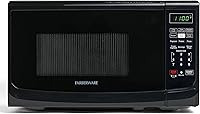
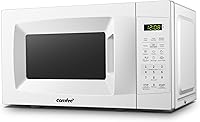
This BLACK+DECKER model is 0.7 cu ft and 700W, with 10 power settings and 30 second express cooking. Its removable 10 in glass turntable means it is not a flatbed, so use it as a compact turntable comparison.
This BLACK+DECKER model is 0.9 cu ft and 900W, with 10 power settings, pre-set buttons and a 10.6 in removable glass turntable. It suits buyers who want more power and cavity room than the 0.7 cu ft model, but it still does not solve the flatbed question.
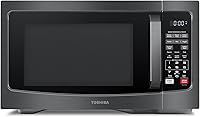
This TOSHIBA model is 1.2 cu ft and 1000W, with humidity sensor cooking, 10 power levels and a 12.4 in glass turntable. It has the largest cavity and strongest power in this group, so it suits larger dishes and faster reheating.
Rule: pick 700W for small loads, 900W for most daily reheating, or 1000W for larger loads and faster cooking.
Why 10 power levels matter in a small oven
Ten power levels let you slow cooking for melting, softening and reheating thick foods. Full power is best for boiling water or fast reheating, while lower levels give you more control.
Use lower power for butter, chocolate, casseroles and leftovers that need heat to move inward. Short bursts at lower power work better than one long blast at full power.
All three models in this group list 10 power levels, so power range alone does not separate them. The difference is the top wattage and the cavity size that wattage must heat.
A 700W oven heating a small mug will feel different from a 1000W oven heating a large rectangular dish. Match wattage to normal load size, then use the lower levels for delicate items.
Defrost control also depends on power and cavity size. The TOSHIBA model lists defrost by weight or by time, with quick access to start from 1 to 6 minutes at full power.
The BLACK+DECKER models list defrost by time or weight in different forms, with quick defrost on the 0.9 cu ft model. A larger cavity can hold a larger frozen block, but frozen food still needs checking and turning without rotation.
Which of these three models fits your needs?
None of these three is a true flatbed, because each one includes a removable glass turntable. That fact matters, so treat them as size and power comparisons for small countertop buyers.
The 0.7 cu ft BLACK+DECKER is the smallest at 17.3 x 13 x 10.2 in. It suits a mug, small plate and compact counter, with 700W and 10 power settings.
The 0.9 cu ft BLACK+DECKER is 18.7 x 13.4 x 10.7 in. It adds cavity room and 900W power, plus a child safety lock, interior light and push-button door release.
The 1.2 cu ft TOSHIBA is 20.6 x 14.6 x 11.8 in. It adds the most room, 1000W power, humidity sensing, ECO mode and a mute function, but it needs the most counter and cabinet space.
For sensor focused alternatives, see our best lg inverter microwave guide. For sensor cooking in general, read our best countertop microwave with sensor cooking guide.
Rule: choose the smallest cavity that fits your normal dish, and do not buy a turntable model if you truly want flatbed use.
How do you plan installation for a small microwave?
Installation decides whether a small oven feels easy or cramped. Measure the counter, overhead cabinets, fan clearance and door swing before you buy.
A model that fits on paper can fail in a tight kitchen.
Leave the maker's required gaps on the sides, top and back. Keep the air vents clear of walls, curtains, paper towels and heat sources.
Check that the plug reaches an outlet without stretching the cord across a sink or cooktop.
Countertop models are not automatically built in models. Do not place one in a closed cabinet unless the maker allows that use and the opening meets the stated clearances.
Also check the path into the kitchen. Height, width and weight matter when you bring it home.
The TOSHIBA listed here weighs 34.8 lb, so plan for help on stairs or through a narrow door.
Rule: tape the outside size on the counter first, then confirm vents, plug access and door swing.
How do you set up and care for a flatbed cavity?
A flat cavity is easy to wipe, but crumbs still collect in corners. Wipe spills soon, keep the floor dry and check the walls for splatter after greasy foods.
Use microwave safe dishes that match the cavity size. Keep food and containers off the walls and away from the door.
Do not let paper towels, packaging or metal touch the cavity walls.
For routine care, wipe with a damp cloth and mild cleanser, then dry the cavity. Clean the door seal and handle with the same care.
Let the oven cool before deep cleaning.
If you use a turntable model instead, wash the glass turntable and roller ring as the maker directs. A cracked turntable or worn ring can cause noise and uneven movement, so inspect both parts before use.
Rule: clean spills early and keep the cavity floor, walls and door seal free of food buildup.
What foods suit a small microwave without a turntable?
Rectangular leftovers, casserole portions and flat dishes suit a flatbed best. They use the corners and can be turned once as a single dish.
Mugs, soup and round plates also work, but they gain less from the flat shape. You will still need to stir liquids and turn solid foods halfway for even heat.
For a simple morning routine, see how to reheat egg muffins in microwave. A shallow dish and a halfway turn help more than full power for that kind of food.
Avoid overfilling a small cavity. Crowded food heats unevenly because steam and waves cannot move around the load.
Smaller portions in a shallow dish heat more evenly in any small oven.
Rule: use a flatbed for rectangular dishes, and use small shallow portions for even heating.
When should you choose a turntable model instead?
Choose a turntable when you want the oven to move food for you. That helps with mugs, soups, round plates and thick leftovers that need steady rotation.
The three models in this guide all include a removable turntable. That makes them practical for buyers who need automatic movement, but it also means they are not the flatbed design this guide is about.
A best 900 watt countertop microwave pick can be a good middle ground. You get faster heating than a 700W model, with rotation for less hands on cooking.
Turntable size also limits dish width. A round plate must fit within the turntable diameter, even if the cavity corners could hold more.
Measure the plate, not just the cavity.
Rule: pick a turntable for hands off reheating, and pick a flatbed for rectangular dishes and corner space.
How should you decide between 0.7, 0.9 and 1.2 cu ft?
Start with the dish you use most. A 0.7 cu ft cavity suits mugs, small plates and compact counters.
A 0.9 cu ft cavity adds room for wider plates and more headroom.
A 1.2 cu ft cavity suits larger rectangular dishes and family size leftovers. It also gives more room for tall containers, but it needs a wider counter and more lifting strength during setup.
Small households should also consider a toaster oven for small households if browning and baking matter more than microwave speed. That is a different appliance, so compare it by cooking tasks, not by cavity volume alone.
Check outside size at the same time. The 0.7 cu ft model is 17.3 in wide, the 0.9 cu ft model is 18.7 in wide, and the 1.2 cu ft model is 20.6 in wide.
Those widths decide cabinet fit before capacity does.
Rule: size up only when your normal dish needs the extra width, depth or height.
What is your final decision rule for a small microwave without a turntable?
Pick a small microwave without turntable design when a rectangular dish is your normal load and you will turn it halfway. Pick a turntable model when you want automatic movement for mugs, soups and round plates.
Match power to load size. A 700W model suits small portions, a 900W model suits most daily reheating, and a 1000W model suits larger loads.
Then confirm cavity fit, vent space and door swing before you order.
For the three models here, the 0.7 cu ft BLACK+DECKER suits the smallest counter, the 0.9 cu ft BLACK+DECKER suits mid size daily use, and the 1.2 cu ft TOSHIBA suits larger dishes and sensor cooking. All three include a turntable, so none is a true flatbed.
Final rule: buy the smallest flat cavity that fits your dish, or choose a turntable model when hands off even heating matters more.
Frequently asked questions
Is a small microwave without a turntable better for rectangular dishes?
It can be, when the flat cavity fits a rectangular dish in its longest direction. That saves corner space compared with a round plate on a turntable.
Turn the dish halfway through cooking, because a flatbed has no automatic rotation.
How do you heat food evenly without a turntable?
Use a shallow dish, stir or turn food halfway, and let it stand for a minute after cooking. Keep food away from the walls.
Sensor controls and power levels help, but they do not replace a mid-cook check.
What size should a small flatbed microwave be?
Start with your largest dish, then add space on each side. A 0.7 cu ft model suits mugs and small plates.
A 0.9 cu ft model adds room for wider dishes.
A 1.2 cu ft model suits larger rectangular containers.
Can you put a flatbed microwave in a cabinet?
Only when the maker allows built in use and the opening meets clearance rules. Most countertop models need open sides and top ventilation.
Measure the opening, door swing, plug access and heat gap before you place it.