How to Use a Toaster Oven Cooking Chart
A toaster oven cooking chart works best as a starting point for temperature, time, and rack position, then you adjust for your oven and food. Check doneness early, because small countertop ovens can heat faster than a full-size oven.
On this page (9 sections)
- How does a toaster oven cooking chart work?
- What temperatures should you use for common foods?
- How long should foods cook in a toaster oven?
- Which rack position should you choose?
- How do you convert regular oven times for a toaster oven?
- How do you adjust a chart for your oven and pan?
- When should you use a toaster oven instead of a full-size oven?
- How do you keep chart cooking safe and clean?
- How should you use a toaster oven cooking chart step by step?
A toaster oven cooking chart is most useful when you read it as a range for food type, temperature, rack spot, and time. Use the chart to set your first check point, then adjust for load size, pan color, and how your oven browns.
Start with the food you are cooking, not the dial. A chart may list different times for frozen, fresh, and leftover versions of the same food.
If you are new to countertop cooking, our guide on What Is a Toaster Oven Used For? Explained covers the main jobs before you rely on a chart.
How does a toaster oven cooking chart work?
A toaster oven cooking chart gives starting ranges, not fixed rules. The same food can finish at different times in different ovens, pans, and load sizes.
Most charts list food type, temperature, time range, rack position, and whether to preheat. Some also note when to flip or when to add a topping.
Read the time as a window. Small ovens can move from pale to brown in a few minutes near the end.
Convection models add air movement, which can crisp surfaces faster. Our guide on How Does Convection Cooking Work in a Toaster Oven? explains why fan settings change some times.
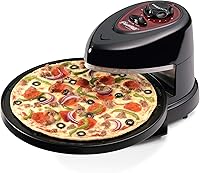
The Presto 03430 Pizzazz Plus Rotating Oven has separately controlled top and bottom heating elements. That control matters when a chart assumes even heat but your food needs more base heat or more top browning.
What temperatures should you use for common foods?
Use 350 to 400°F for most baking and reheating unless the chart or package says otherwise. Higher heat suits browning, while lower heat suits melting and gentle reheating.
Frozen snacks often need the chart range for the package, plus a check for a hot center. Fresh vegetables roast well when cut evenly and not crowded.
Meat and poultry need a thermometer check. A chart can guide range and rack spot, but internal temperature tells you when food is done.
Bacon and other fatty items need extra care with heat and spacing. Our guide to cooking bacon in the toaster oven foil shows how a lined pan helps with drips and cleanup.
Some foods use lower heat on purpose. Cake and quick bread usually need steady heat, because fast top heat can set the crust before the center cooks.
How long should foods cook in a toaster oven?
Start checking at the early end of the chart range. That habit protects small items, because they can finish before a full-size oven time would suggest.
Thin foods heat quickly. Bread, rolls, pizza, and reheated slices need close watching near the top element.
Dense foods need more time. Chicken pieces, casseroles, and thick vegetables should be checked for internal heat and texture, not only surface color.
Frozen foods vary by size and starting temperature. Bagel bites are a good example, because the topping can look hot while the center is still cold.
See our note on cooking instructions bagel bites toaster oven for a safer check point.
The Chicago Metallic 4-Piece Toaster Oven Bakeware Set includes a 9.5 x 6.25 inch baking pan, a 9.25 x 6 inch cooling rack, an 11 x 7 inch roast and cake pan, and a 6-cup muffin pan. Dark or crowded pans can change chart times, so leave space around the pan.
Which rack position should you choose?
Choose the middle rack for most chart entries. It gives balanced heat and suits baking, roasting, and reheating.
Move food higher for top browning or melted cheese. Move it lower when the top browns too fast.
Keep a safe gap between food and the heating element in all cases.
Pan size matters. A pan that nearly touches the walls can block air flow and create hot spots.
A smaller load in the center usually follows the chart better.
If you are learning basic controls first, our guide to how to work a toaster oven covers dials and safe placement. Read that before you change rack spots mid-cook.
Some models have top and bottom element choices instead of a single bake setting. Use bottom heat to finish the base and top heat to brown.
Change one variable at a time so you can learn what helped.
How do you convert regular oven times for a toaster oven?
Convert regular oven times by lowering the first check time, not by guessing a new finish time. Small ovens heat food faster, but large dishes still need full cooking time.
A common starting rule is to check about 5 to 10 minutes early for small items. For larger dishes, keep the chart temperature and watch closely near the end.
Our oven to toaster oven conversion calculator helps you turn a full-size oven time into a first check time. Use it with the food chart, not instead of it.
Preheating also changes the result. Some small ovens reach temperature quickly, while others need a few minutes for even heat.
Follow the chart note.
The NESCO 4816‑14 Electric Roaster Oven for Everyday has a 6-quart porcelain coated steel cookwell and a 200°F to 450°F temperature range. Its larger capacity suits one-pot dishes, but a chart time for a small pan may not fit a full load.
How do you adjust a chart for your oven and pan?
Adjust a chart by changing one variable per batch. Note the food, pan, rack spot, temperature, and check time so the next batch improves.
Dark pans absorb heat and can brown faster than light pans. Glass and ceramic also hold heat differently and may need more time.
Load size is another shift. A single layer of vegetables roasts more evenly than a heaped pan.
Spacing pieces apart lets hot air reach all sides.
Altitude, starting food temperature, and oven calibration all play a role. Write down what you changed, because memory is less reliable than a short note.
If you switch between models, learn the controls for that oven first. Our guide to how to use cuisinart toaster oven shows how one brand labels settings, which helps you translate chart terms to dials.
When should you use a toaster oven instead of a full-size oven?
Use a toaster oven when the food is small, the load is light, or you want faster heat. It suits reheating, toast, pizza, snacks, small bakes, and side dishes.
A full-size oven is better for large roasts, multiple racks, big casseroles, and recipes that need wide air space.
Our comparison on Is It Better to Use a Toaster Oven or an Oven? helps you choose by food size and load. Use that choice before you pick a chart entry.
Energy use is another factor. Presto says the Pizzazz Plus saves as much as 60% in energy compared to a conventional oven.
That fits small loads, where a countertop oven heats a smaller space.
How do you keep chart cooking safe and clean?
Keep food away from heating elements and use oven-safe pans. Never leave the oven unattended with fatty foods, and keep the crumb tray clean.
Check that the pan fits without touching the elements. Foil should be used only where the maker allows it, and it should never touch a hot element.
Use a thermometer for meat, poultry, and reheated leftovers. Color is a clue, not proof.
Wash bakeware with methods that suit the coating. Chicago Metallic says its set is dishwasher safe, though hand washing is recommended to extend product life.
How should you use a toaster oven cooking chart step by step?
Use a toaster oven cooking chart in five steps: find the food, set the rack, set the temperature, check early, and note the result. That order keeps you from changing too many things at once.
First, pick the closest food entry and note if it covers fresh, frozen, or leftover food. Second, place the pan on the rack the chart suggests, usually the middle.
Third, set the temperature and preheat only if the chart calls for it.
Fourth, start the timer and check at the early end of the range. Flip or move the pan only when the chart or food needs it.
Fifth, record the final time and any change you made.
For your next batch, repeat the same setup unless the food was too pale, too brown, or cold in the center. If it was too brown, lower the rack for the next round.
If it was pale, raise the rack or add a short top-heat finish.
Keep a simple chart note on your fridge with food, rack, temperature, and check time. After two or three batches, you will see your oven's pattern faster than any generic chart can show.
That is the real value of a toaster oven cooking chart: it gives you a safe first guess, and your notes turn it into your own guide.
Frequently asked questions
How do I read a toaster oven cooking chart?
Find the food row first, then check the time range, temperature, and rack position. Treat the time as a window, not a promise.
Start with the lower end for small loads, check early, and adjust the next round based on color and internal temperature.
Are toaster oven cooking times faster than regular oven times?
Often yes for small foods, because the smaller space heats faster and the food sits close to the elements. Thin items, reheated leftovers, and snacks can finish sooner than a full-size oven chart suggests.
Larger roasts and casseroles need closer checks against the chart range.
What rack position should I use from a cooking chart?
Use the middle rack for most baking and roasting, the upper area for browning and melting, and the lower area when the top is browning too fast. Keep food a safe distance from the heating elements.
If a chart lists a rack spot, follow it before you change temperature.
Can I use a regular oven chart in a toaster oven?
You can use it as a rough guide, but expect changes in time and browning. Smaller loads heat faster, and fan models add another variable.
Our oven to toaster oven conversion calculator helps you set a safer first check time.