How to Use a Cuisinart Toaster Oven
To use a Cuisinart toaster oven, choose the cooking mode, set the temperature and time, place food on the correct rack, and start the cycle. Preheat when the recipe needs it, and check food before the timer ends because countertop ovens can cook quickly.
On this page (10 sections)
- How do you set up a Cuisinart toaster oven?
- What do the Cuisinart toaster oven controls do?
- Which rack position should you use?
- How do you preheat a Cuisinart toaster oven?
- How do you choose a pan for a Cuisinart toaster oven?
- How do you use the cooking modes for everyday food?
- How do you cook with a Cuisinart toaster oven safely?
- How do you clean a Cuisinart toaster oven?
- What should you do if food cooks too fast?
- How do you use a Cuisinart toaster oven well every day?
To use a Cuisinart toaster oven, select the cooking mode, set the temperature and time, choose the rack position, and start the cycle. Preheat only when the recipe needs a fixed starting temperature, and check food before the timer ends.
Use a toaster oven cooking chart to compare starting times and temperatures. These ovens handle toast, baking, broiling, roasting, and reheating.
Controls differ by model, so follow the labels on your oven. For main tasks, [What Is a Toaster Oven Used For?
Explained](/what-is-a-toaster-oven-used-for/) offers useful context.
How do you set up a Cuisinart toaster oven?
Place the toaster oven on a level, heat-safe surface with open space around it. Remove packaging and confirm the crumb tray and rack sit correctly.
Read the manual before first use. It covers rack positions, convection, cookware, cleaning, and setting order.
Keep the cord away from hot surfaces. Do not place anything on top unless the manual allows it, and keep items clear of the door and vents.
See [What Is a Countertop Toaster Oven?
What It Means](/what-is-a-countertop-toaster-oven/) for more context.
What do the Cuisinart toaster oven controls do?
The main controls usually choose the cooking function, temperature, and time. A function control may select toast, bake, broil, roast, or another mode.
Start with the function. It determines which heating elements operate and whether a fan or another programmed method is used.
Next, set the temperature using the recipe, unless the manual gives a different instruction for that mode.
Set the timer last. Some models use a dial, others use buttons or a digital display.
Confirm the oven started and the timer is counting down.
Follow the labels on your model. The manual explains any icons you do not recognize.
What does the bake setting do?
Bake uses the oven's baking program for foods that need steady heat around the cooking area. Use it for items such as baked dishes, small cakes, cookies, and other foods that the recipe says to bake.
Place the rack where the manual or recipe recommends. The middle position is often a useful starting point, but the correct position depends on the food, pan, and model.
What does the broil setting do?
Broil cooks food with strong heat from above, so it suits browning and finishing. Use a shallow, heat-safe pan and keep food at the distance stated in the manual.
Watch broiling closely. The surface can brown quickly, and the food may need turning if the recipe calls for it.
What does convection do?
Convection uses a fan to move hot air around the oven cavity. It can help heat circulate around food, but recipes may need a lower temperature or shorter time when convection instructions are given.
Use the conversion guidance in your Cuisinart manual or recipe. Do not assume every model uses the same adjustment.
Which rack position should you use?
Use the middle rack position for many baking and reheating tasks, then move the rack based on the heat the food needs. Higher positions bring food closer to the top element.
A higher rack helps brown the top, but it can brown the surface too fast. Use it only with enough clearance from the upper element.
A lower rack suits taller dishes or foods needing more distance from the top element. Do not place food directly on the oven floor unless the manual says to do so.
How do you preheat a Cuisinart toaster oven?
Choose the cooking mode and temperature, then allow the oven to reach the target temperature before adding food when the recipe requires preheating. Wait for the preheat signal if your model provides one.
For a step-by-step sequence, see how to preheat a toaster oven. Preheating matters most when a quick, even start affects the result.
Cakes, biscuits, pastries, and many baked dishes are more sensitive to starting temperature than reheating. Toast and certain frozen items may not need a full preheat, as Do Toaster Ovens Need to Preheat? explains.
How do you choose a pan for a Cuisinart toaster oven?
Choose a pan that fits fully on the rack with clearance from the walls, door, and heating elements. The pan should also be rated for the cooking temperature and suitable for the food.
Measure the oven cavity before buying bakeware. A pan that fits a full-size oven may be too wide, too tall, or too close to the elements in a countertop oven.
Is a small bakeware set useful?
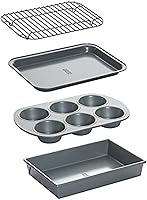
A small bakeware set helps when you want several pan shapes for small-batch cooking and reheating. The Chicago Metallic 4-Piece Toaster Oven Bakeware Set includes a 9.5 x 6.25 inch baking pan, a 9.25 x 6 inch cooling rack, an 11 x 7 inch roast/cake pan, and a 6-cup muffin pan.
The pieces are made from heavy-weight aluminized steel with a non-stick coating and are oven safe to 450°F. They nest for compact storage, and the cooling rack can also work as a baking rack.
Choose this set if you need several small-batch shapes in one storage-friendly group. Hand washing is recommended to help extend its life, although the set is dishwasher safe.
For more help choosing pans, see Toaster Oven Bakeware: The Complete Buying Guide.
How do you use the cooking modes for everyday food?
Match the cooking mode to the food, then adjust the rack and time based on thickness and surface. Start with the recipe or package instructions and check early.
For toast, place bread as directed, select the toast setting if available, and watch the first cycle. For reheating, use a lower temperature than broiling in a suitable pan, covering food if instructions allow.
For baking, preheat when needed and avoid opening the door often. For roasting, leave room around food, use a pan that catches drips, and check the center with a food thermometer when needed.
The USDA food safety guidance explains safe handling and temperature decisions for meat.
Can a rotating countertop oven replace a Cuisinart toaster oven?
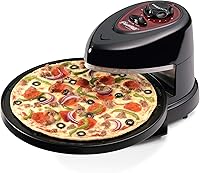
A rotating countertop oven can help with foods that benefit from continuous tray movement and separate top and bottom heat. The Presto 03430 Pizzazz Plus Rotating Oven has a 12-inch size, a rotating tray, separately controlled top and bottom heating elements, and a timer that automatically turns off the heating elements.
Choose it when pizza and similar foods are your main concern and you want a rotating tray. It is a different tool from a Cuisinart toaster oven, so it does not replace the broader control layout or cavity shape of your toaster oven.
The removable nonstick baking pan is intended to make cleanup and storage easier. Let the pan cool before handling it, and follow its care instructions.
Is a roaster oven useful for larger dishes?
A roaster oven helps when you need a 6-quart countertop vessel for roasting, baking, cooking, steaming, and serving. The NESCO 4816-14 Electric Roaster Oven has a white porcelain-coated steel cookwell, a 6-quart capacity, and a 200°F to 450°F temperature range.
Choose it for family-size dishes, one-pot meals, or supplemental cooking when a shallow toaster oven cavity is not enough. Its removable porcelain-enamel steel cookwell and stay-cool side handles support moving and cleaning the vessel.
It is not a direct substitute for a Cuisinart toaster oven when you need toast, a shallow rack, or a compact baking cavity. For a different countertop setup, compare Is It Better to Use a Toaster Oven or an Oven?.
How do you cook with a Cuisinart toaster oven safely?
Keep food, cookware, and foil away from the heating elements, and stay nearby when using high heat or broil. Use heat-safe tools and protect your hands when removing hot pans.
Do not overfill the rack or tray, as crowding blocks airflow and causes uneven cooking. Use foil only when the manual and recipe allow it, keeping it secured in the pan and away from elements.
Open the door carefully because hot air and steam can escape. Set hot cookware on a heat-safe surface, and for a rotisserie model, follow instructions for balance and clearance.
See How to Use a Rotisserie Toaster Oven for the setup and cooking sequence.
How do you clean a Cuisinart toaster oven?
Unplug the toaster oven and let it cool before cleaning the crumb tray, rack, door, and interior surfaces. Remove crumbs regularly so they do not collect near heating elements.
Use the cleaning method allowed by the manual. A soft, damp cloth handles loose crumbs and light residue, but do not soak the oven or pour cleaner inside it.
Remove the crumb tray carefully and empty it over a bin. Wash removable parts only as directed, then dry them fully before returning them.
Do not scrub heating elements or use abrasive tools on surfaces that can be damaged.
What should you do if food cooks too fast?
Lower the temperature, move the rack farther from the heating element, or shorten the cooking time after checking the food. Start with one adjustment so you can see which change helps.
Countertop ovens have compact cavities, so food may sit closer to elements than in a full-size oven. Dark pans can also brown food faster than lighter pans.
If the top browns before the center cooks, move the rack lower or cover food only if the recipe allows it. If the bottom stays pale, check rack position and pan contact, and note the settings for your next attempt.
How do you use a Cuisinart toaster oven well every day?
Use the manual for your model's symbols and limits, then build a routine around the function, temperature, rack position, and timer. Preheat for foods needing a fixed starting temperature, keep clearance around cookware, and check food early.
Choose the Chicago Metallic set when small pans and compact storage solve your main problem. Choose the Presto rotating oven when rotating pizza cooking and separate top and bottom heat matter most.
Choose the NESCO roaster when you need a deeper 6-quart vessel.
For a broader beginner walkthrough, read How to Use a Toaster Oven. For another brand-specific guide, compare How to Use a Hamilton Beach Toaster Oven.
Frequently asked questions
How do you use the controls on a Cuisinart toaster oven?
Choose the cooking function first, then set the temperature and cooking time with the controls on your Cuisinart model. Put food on the recommended rack, close the door, and start the cycle.
Exact buttons and display steps vary by model, so use the manual for unfamiliar symbols or special programs.
Which rack position should you use in a Cuisinart toaster oven?
Use the middle position for many everyday baking tasks unless the recipe or manual says otherwise. A higher position places food closer to the top element for browning, while a lower position can help with bottom heat.
Leave clearance around the food so air and heat can circulate.
Do you need to preheat a Cuisinart toaster oven?
Preheat a Cuisinart toaster oven when the recipe depends on a fixed starting temperature, such as cakes, biscuits, and many baked dishes. Toasting and reheating may need less preheating.
If your model has a preheat signal, wait for it before putting the food inside.
Can you use regular pans in a Cuisinart toaster oven?
Use pans that fit without touching the walls, door, or heating elements and that are rated for the selected cooking temperature. Toaster oven bakeware is easier to position in a small cavity.
Check the Cuisinart manual before using glass, foil, parchment, or any pan not supplied with the oven.