How to Use a Rotisserie Toaster Oven
To use a toaster rotisserie oven, balance the food on the spit, secure both forks, place it in the oven, and use the rotisserie setting only after checking clearance. Turn the food slowly and confirm it reaches a safe internal temperature before serving.
On this page (10 sections)
- What do you need before using a toaster rotisserie oven?
- How do you prepare food for the rotisserie spit?
- How do you balance food on the spit?
- How do you install the spit in the oven?
- How should you set the heat and cooking time?
- What should you do with drips and grease?
- Which countertop products help with related cooking?
- How do you know when rotisserie food is done?
- How do you clean a toaster rotisserie oven?
- What is the safest way to use a toaster rotisserie oven?
To use a toaster rotisserie oven, center the food on the spit, secure it with both forks, check that it turns freely, and cook it with the correct rotisserie setting. Use a thermometer to confirm doneness, because browning alone doesn't show whether the center is safe.
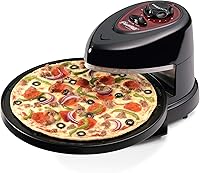
A rotisserie works by turning food slowly in front of the heating elements. The turning motion can brown the surface more evenly, but only when the food is balanced and has enough room to rotate.
What do you need before using a toaster rotisserie oven?
You need a compatible rotisserie spit, adjustable forks, the oven's supports, a drip pan if the manual calls for one, and a food thermometer. Keep heat-safe gloves and a clear counter nearby.
Read the oven manual before assembling anything. Confirm the maximum food size, permitted temperature range, rack position, motor limits, and whether the spit and forks are dishwasher safe.
A rotisserie oven needs open space around the food. Remove excess packaging, loose ties, and ingredients that could fall into the heating area.
How do you prepare food for the rotisserie spit?
Prepare food so its shape is compact and its weight is spread around the center. Tie loose poultry legs and wings with oven-safe kitchen twine if the manual permits it, and trim pieces that could catch on the oven walls.
Pat the outside dry before seasoning. A dry surface usually browns more readily than a wet one, while excess marinade can drip onto the heating area.
Do not overload the spit. A large roast may fit between the forks but still be too heavy or wide for the motor and cooking chamber.
How do you balance food on the spit?
Push the spit through the thickest central part of the food, then adjust it until the weight is even on both sides. Secure the food tightly between the forks before placing the spit in the oven.
Hold the assembled spit by its handles and rotate it by hand. If the same side repeatedly falls downward, remove one fork, shift the food, and test again.
Small uneven areas can be tied down, but a strongly unbalanced roast needs repositioning. An unbalanced spit can turn unevenly, strain the motor, or bring the food too close to a heating element.
How to use a toaster rotisserie oven for chicken
For chicken, place the spit through the body cavity or the thickest central line, depending on the oven's fork design. Secure the breast and legs with the forks, then tie loose parts so they don't hang into the heating area.
Check every side of the chicken by turning the spit manually. The wings, legs, and skin should remain clear of the walls, door, trays, and heating elements.
For more oven size guidance, compare our guide to the best toaster oven for baking chicken. If your oven has no rotisserie parts, our guide to baking chicken in a toaster oven covers a standard tray method.
How do you install the spit in the oven?
Install the spit with the oven turned off and cool. Place one end into the motor coupling and the other end into its support, following the manual's diagram.
Keep the food centered while lifting the spit. The forks should remain tight, and the food should not slide toward either end.
Before switching on the heat, turn the spit by hand through a full rotation. Watch the highest and lowest points, including the door, crumb tray, drip pan, and heating elements.
If anything catches, remove the spit and correct the problem. Never hold the food in place while the motor is running.
How should you set the heat and cooking time?
Set the temperature and cooking mode recommended for the food and oven manual. Start with the oven's rotisserie setting if it has one, and avoid guessing that a bake or broil setting will drive the rotisserie motor.
Use a timer as a reminder, not as proof that the food is done. Food shape, starting temperature, bone structure, and oven design all affect cooking time.
Keep the door closed as much as possible. Opening it releases heat and can extend cooking, while repeated checking also brings your hands closer to hot moving parts.
The USDA's safe minimum internal temperature chart lists the temperatures to use when checking meat and poultry. Insert the thermometer into the thickest part without touching bone or the spit.
What should you do with drips and grease?
Use the drip pan required by the oven manual, and position it before the food begins turning. It should catch drips without touching the food or blocking the spit.
Do not pour water into a hot oven unless the manual specifically instructs you to do so. Grease and water can splatter, and liquid near electrical parts creates a safety risk.
Turn off the oven and let it cool before removing the pan. Use heat-safe gloves, lift the spit with its handles, and transfer the food to a stable cutting board.
Which countertop products help with related cooking?
A rotisserie toaster oven needs dedicated turning parts, so a standard countertop oven is not automatically a rotisserie oven. These products can still help with roasting, baking, broiling, or serving food when you don't need a rotating spit.
The NESCO model is a 6-quart electric roaster with a porcelain-coated steel cookwell and a 200°F to 450°F temperature range. It supports roast, bake, cook, steam, and serve functions, making it useful for family-size dishes that stay in a cookwell rather than turning on a spit.
Choose it when you want a compact roaster for moist, contained cooking. Skip it if your main goal is watching food rotate on a toaster-oven spit.
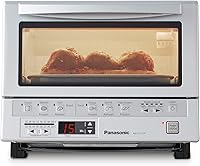
The Hamilton Beach model is a 6-slice countertop convection toaster oven with bake, broil, toast, and convection functions. It has 2 rack positions, a 150°F to 450°F temperature range, a bake pan, an oven rack, and a slide-out crumb tray.
Its roll-top door stays out of the way when open, which can make access easier when removing a tray. It is a better fit for standard tray cooking than for rotisserie cooking because the provided product details do not identify a rotisserie spit or motor.
The Cuisinart model is an 1800W countertop toaster oven broiler with a 0.5 cu. ft. interior. It includes toast, bagel, bake, broil, pizza, and keep-warm functions, plus a wire rack, broiling rack, baking and drip pan, crumb tray, and recipe book.
Choose it when you want several standard cooking modes and space for 6 slices of bread, 4 bagel halves, or an 11 in pizza. It is not a substitute for a dedicated rotisserie toaster oven.
For simple meals after learning the setup, see these toaster oven recipes for beginners. You can also compare toaster oven hamburgers when you want a smaller tray-cooked meal.
How do you know when rotisserie food is done?
Check the thickest section with a food thermometer before serving. The outside may brown before the center reaches a safe temperature, especially when the food is large or uneven.
Stop the motor before opening the door if the oven manual requires it. Use gloves to steady the spit, and keep your face and hands away from escaping steam and hot grease.
Let roasted food rest as directed by the recipe. Transfer it to a clean board or platter, and don't place cooked food back on a surface that held raw meat.
How do you clean a toaster rotisserie oven?
Clean the spit, forks, drip pan, rack, and interior surfaces only after they have cooled. Follow the manual for removable parts and cleaning products, especially around heating elements and the motor coupling.
Wipe grease before it hardens, but don't spray cleaner into the motor, controls, vents, or heating elements. A removable crumb tray can help with regular cleanup on standard toaster ovens.
For foil use, read can aluminum foil go in a toaster oven before lining a pan or covering food. Foil must not block airflow, touch heating elements, or interfere with the rotating assembly.
What is the safest way to use a toaster rotisserie oven?
The safest method is to balance the food, check full clearance, use the correct parts, and verify the internal temperature. Stop immediately if the spit wobbles, the food shifts, or any part touches the oven.
Pick a dedicated rotisserie toaster oven when turning food is the main goal. Pick the NESCO for a 6-quart roaster, the Hamilton Beach for convection tray cooking, or the Cuisinart for an 1800W toaster oven broiler with several standard modes.
For the broader appliance choice, read Is It Better to Use a Toaster Oven or an Oven?, then review What Is a Countertop Toaster Oven? What It Means if you are still comparing countertop designs.
For another toaster-oven project, see how to make hard-boiled eggs in a toaster oven.
Frequently asked questions
Can you use any toaster oven for rotisserie cooking?
No. Use rotisserie cooking only when the toaster oven is designed for it and includes the matching spit, forks, motor, and supports.
Check the manual for food weight, clearance, temperature, and operating limits before inserting food.
A standard toaster oven without those parts should use its normal bake, broil, or toast functions instead.
How do you balance food on a rotisserie spit?
Push the spit through the center of the food and secure it with the forks. Move the food by hand before cooking to find a balanced position, then tighten the forks so the food does not slide.
If one side drops heavily as the spit turns, reposition the food before starting the motor.
What temperature should chicken reach in a rotisserie toaster oven?
Chicken should reach 165°F in the thickest part, away from the bone, before serving. Use a food thermometer and check more than one area if the food is large or uneven.
The USDA explains safe minimum internal temperatures for poultry and other meats.
What should you do if the rotisserie food touches the oven?
Stop the motor and turn off the oven if the food touches a heating element, wall, door, or tray. Allow hot parts to cool before adjusting the spit or food.
Measure the food and check the manual's clearance guidance before trying again.