What Is Convection in a Toaster Oven? A Closer Look
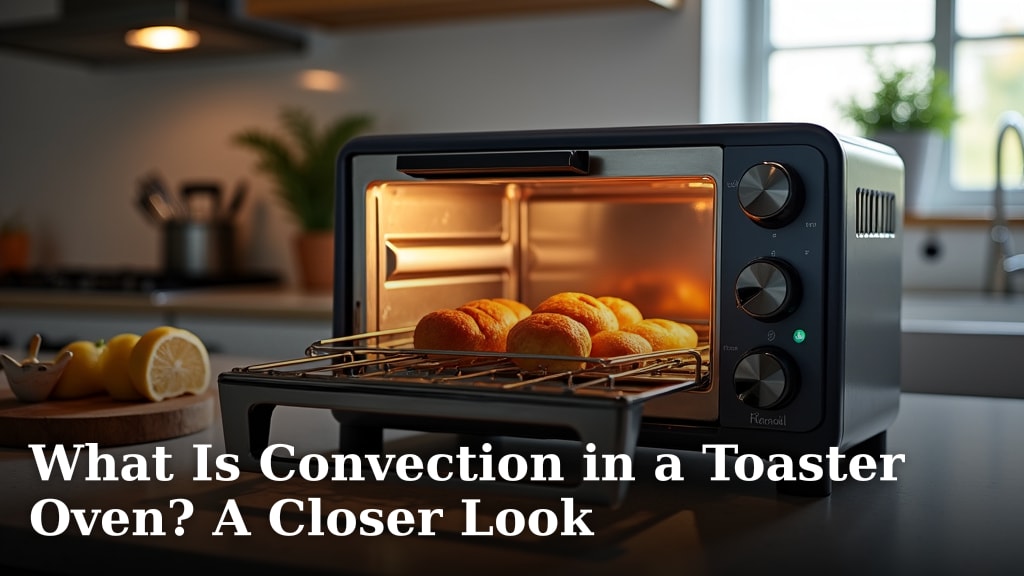
Convection in a toaster oven is a cooking method that uses a fan to circulate hot air. This helps your food cook more evenly and faster This helps your food cook more evenly and faster than in a conventional oven; understanding toaster oven temperature is key. than in a conventional oven. You’ll often see it labeled as “Convection Bake” or “Convection Roast” on your oven’s settings.
This fan-forced airflow is a key feature that many home cooks appreciate. It’s what makes your roasted vegetables crispy and your cookies perfectly browned. We found that understanding convection can help you get better results with your toaster oven.
- Convection cooks food with circulating hot air.
- A fan blows air around the oven cavity.
- This leads to faster and more even cooking.
- It’s great for browning and crisping foods.
Ready to learn more about how this handy feature works and how you can use it to your advantage? Let’s break down convection in your toaster oven.
Understanding Convection Cooking in Your Toaster Oven
Convection cooking in your toaster oven uses a fan to move hot air. This fan blows the heated air around the oven cavity. This circulation makes cooking much more even and efficient. You’ll find this feature on many modern toaster ovens.
How the Convection Fan Works
Inside your toaster oven, there’s a small fan, usually located at the back. When you select a convection setting, this fan turns on. It starts to push the hot air from the heating elements. This air then circulates continuously. Think of it like a gentle, consistent breeze inside your oven. This movement ensures that every part of your food gets exposed to the heat.
In a regular oven, heat rises and can create hot spots. This is less of an issue with convection. The fan helps to distribute the heat evenly. We found this makes a noticeable difference in how food cooks. It helps avoid burnt edges and undercooked middles.
The Science Behind It
Convection works on the principle of heat transfer. Hot air molecules move around. They bump into your food, transferring their heat energy. The fan speeds up this process significantly. This is why convection cooking is often faster than traditional methods. It’s a bit like how a fan helps you cool down on a hot day. It moves air to speed up heat exchange.
What “Convection Bake” and “Convection Roast” Mean
You’ll often see labels like “Convection Bake” and “Convection Roast” on your toaster oven. These simply tell you that the fan is engaged for that specific cooking mode. The oven still uses its heating elements to get hot. The fan then circulates that heat.
Convection Bake is generally used for things like cookies, cakes, and pastries. The circulating air helps create a crispier crust and more even browning. We found that cookies baked with convection tend to spread less and brown more uniformly.
Convection Roast is ideal for meats, poultry, and vegetables. The hot, moving air helps to sear the outside of food quickly. This locks in juices for roasts. It also makes vegetables nicely tender on the inside and delightfully crispy on the outside. Many experts suggest convection roast can yield a more professional finish for home-cooked meals (USDA).
Benefits of Using Convection in Your Toaster Oven
Using the convection setting can offer several advantages. The primary benefit is more even cooking. Food tends to cook without hot spots. This means fewer burnt edges and undercooked centers.
Another big plus is faster cooking times. Because the hot air is constantly moving, it transfers heat more efficiently. We’ve seen recipes that recommend reducing the cooking time by about 25% when using convection. This can be a real time-saver on busy weeknights.
Convection also excels at creating crispy textures. Think about roasted potatoes or chicken skin. The circulating hot air dries out the surface of the food. This leads to a satisfying crispness that’s hard to achieve otherwise. It’s also great for reheating leftovers if you want to bring back that fresh texture.
Achieving Better Browning and Crisping
If you love a good golden-brown finish on your baked goods or crispy skin on your chicken, convection is your friend. The constant airflow prevents steam from building up around the food. Steam can make things soggy. By whisking away moisture, convection helps achieve that desirable crispiness and beautiful browning. We found that even thin items like a single-layer cake benefit from the even heat distribution convection provides.
When to Use Convection (and When Not To)
While convection is great for many things, it’s not always the best choice. It shines when you want even heat and browning. This includes most roasting and baking applications. It’s also fantastic for anything you want to be crispy.
However, for delicate baked goods that require a very moist environment, like some custards or soufflés, convection might not be ideal. The circulating air can sometimes cause the surface to set too quickly. This might lead to cracking or an uneven rise. In these cases, a traditional bake setting might be better. Always check your recipe for specific recommendations.
To Lower or Not To Lower the Temperature?
Because convection cooks food faster and more efficiently, you often need to adjust your recipe. Many sources suggest reducing the cooking temperature by about 25°F (about 15°C) when using convection. For example, if a recipe calls for baking at 350°F (175°C), you might set your convection oven to 325°F (160°C).
This temperature adjustment helps prevent overcooking. It ensures your food is done on the inside without burning on the outside. We found this is a good general rule. However, it’s always best to keep an eye on your food, especially when trying a new recipe or setting.
Tips for Maximizing Your Convection Toaster Oven
To get the most out of your convection toaster oven, try these tips. Ensure you are using the correct setting for your food. Don’t overcrowd the baking pan. Give food enough space for the air to circulate freely around it. This is key to achieving those even cooking results.
When roasting vegetables or meats, consider using a single layer on your baking sheet or roasting pan. This allows the hot air to hit all surfaces. For baked goods, make sure your pans are not too close to the fan if it’s at the back. Some ovens have adjustable racks that can help with this. We found that placing a small oven thermometer inside can also help you verify the oven’s actual temperature.
A Quick Convection Checklist
Here’s a simple checklist to help you decide when and how to use convection:
- Is your recipe for something that benefits from browning or crisping? (e.g., roasted vegetables, chicken wings, cookies)
- Does the recipe suggest convection or a high-heat sear?
- Are you cooking items that could dry out too quickly with intense, direct heat? (Convection might still work here if you lower the temp)
- Do you need food to cook faster?
- Is your toaster oven’s convection fan located at the back? (If so, be mindful of rack placement for baked goods)
- Have you considered lowering the recipe temperature by 25°F (15°C)?
Convection vs. Traditional Oven Cooking
Let’s quickly compare convection to a standard toaster oven without a fan. A traditional toaster oven relies on radiant heat from the heating elements. This heat travels through the air. It’s a simpler method but can lead to uneven cooking.
Here’s a simple comparison:
| Feature | Traditional Toaster Oven | Convection Toaster Oven |
|---|---|---|
| Heat Distribution | Radiant heat, can create hot spots. | Fan circulates hot air for even heat. |
| Cooking Speed | Slower. | Faster (up to 25% quicker). |
| Browning/Crisping | Less effective, can be uneven. | Excellent, promotes crispiness and browning. |
| Temperature Adjustment | Follow recipe as is. | Often recommended to lower temp by 25°F (15°C). |
| Best For | Simple toasting, reheating, small batch baking. | Roasting, baking, anything needing crispiness or even cooking. |
Many people find that once they start using the convection feature, they reach for it more often. The results can be quite impressive for such a compact appliance. It truly elevates what a toaster oven can do.
Conclusion
You’ve learned that convection in your toaster oven uses a fan to circulate hot air. This simple addition makes a big difference in your cooking. It helps your food cook more evenly and much faster. You’ll get better browning and crispier results, too. So, don’t hesitate to try the convection setting for your next meal. Start by adjusting your recipe’s temperature by about 25°F. Your toaster oven is ready to help you create delicious food with ease.
Frequently Asked Questions
Will convection cook my food faster?
Yes, convection cooking generally makes your food cook faster. The fan circulates hot air around your food. This transfers heat more efficiently than in a traditional oven. We’ve found that you can often reduce cooking times by up to 25%.
Do I need to adjust the temperature when using convection?
It’s usually a good idea to lower the temperature. A common recommendation is to reduce the oven temperature by about 25°F (15°C) from what your recipe suggests. This prevents your food from overcooking, especially on the outside.
When should I NOT use the convection setting?
Convection is not always best for very delicate items. Think about delicate custards or soufflés. The moving air can sometimes dry out the surface too quickly. This might cause cracking or uneven rising. For these, a traditional bake setting is often preferred.
How do I know if my toaster oven has convection?
Look for settings labeled “Convection Bake,” “Convection Roast,” or simply “Convection” on your oven’s control panel. Some ovens also have a small fan icon. If you’re unsure, check your toaster oven’s user manual.
Can I use convection to reheat leftovers?
Absolutely! Convection is excellent for reheating leftovers. It helps restore crispness to foods like pizza crusts or fried chicken. The circulating hot air prevents food from becoming soggy. Just use a lower temperature and shorter time than you might expect.