How to Use an Oster Toaster Oven
To use an Oster toaster oven, choose the cooking mode, set the temperature, set the timer, and place food on the correct rack. Watch the first batch closely because cooking time depends on the food, pan, and model.
On this page (9 sections)
- How do you use an Oster toaster oven step by step?
- What do the Oster toaster oven cooking modes mean?
- How does the Oster toaster oven timer work?
- What pans work in an Oster toaster oven?
- Can you cook pizza and convenience foods in a toaster oven?
- How do you cook larger meals without filling the Oster oven?
- How do you clean an Oster toaster oven?
- Is an Oster toaster oven better than a full-size oven?
- What should you remember when using an Oster toaster oven?
To use an Oster toaster oven, select the cooking function, set the temperature, set the timer, and place food in an oven-safe pan. For the steps, see how to preheat a toaster oven.
Keep food away from the heating elements, and check it before the timer ends because compact ovens can brown food quickly.
Oster models vary, so the control labels may differ. The basic process remains the same: prepare the food, choose the mode, set the heat, start the timer, and confirm that the food is cooked before serving.
How do you use an Oster toaster oven step by step?
Start with the cooking mode, temperature, and timer in that order. Use the rack position recommended for the food, then adjust the time after checking the first batch.
A toaster oven cooking chart can help you compare starting times by food.
- Remove extra racks, pans, or packaging from the oven.
- Place the rack where the food will have enough clearance from the elements.
- Select bake, toast, broil, convection, or another available function.
- Set the temperature if the function uses one.
- Preheat when the recipe calls for it.
- Add the food in an oven-safe pan.
- Set the timer and watch the food as it cooks.
- Turn the controls off before removing the pan.
Use dry oven mitts when handling the rack or pan. Let the oven cool before cleaning it or moving it.
For a broader explanation of common countertop oven tasks, see What Is a Toaster Oven Used For? Explained.
What do the Oster toaster oven cooking modes mean?
Bake uses steady heat for general cooking, toast heats bread from both sides, and broil directs stronger heat from above. A convection setting uses moving hot air when your model includes a fan.
How do you use the bake setting?
Use bake for casseroles, vegetables, frozen foods, small baked dishes, and reheating food in an oven-safe pan. For general guidance, see whether toaster ovens need preheating.
Preheat when the recipe depends on a stable starting temperature.
Leave space around the pan so hot air can move. A pan that touches the oven wall or heating element is too large for the cavity.
How do you use toast?
Use toast for sliced bread, bagels, and similar items that need browning. Choose the shade or time setting, then check early because bread thickness and moisture affect the result.
Place slices in a single layer. Remove crumbs after the oven cools, especially when toasted food leaves loose pieces on the tray.
How do you use broil?
Use broil to brown the top of food or finish a dish. Stay close because broiling can darken food quickly, and use the rack position recommended by the manual.
Do not use broil for food that needs slow, even cooking. Keep grease and loose food away from the elements.
How does convection change cooking?
Convection moves hot air around the food, which can help with browning and even cooking. If a recipe was written for a full-size oven, start checking early and follow the Oster manual for temperature adjustments.
The fan does not make every pan suitable. Use cookware that leaves room for airflow and does not block the oven's openings.
How does the Oster toaster oven timer work?
Set the timer for the recipe's cooking period, then check the food before the alarm or shutoff. Oster toaster oven timer controls differ, so confirm whether your model uses a mechanical dial, digital control, automatic shutoff, or a stay-on setting.
A timer measures time, not doneness. Toast may finish before the timer because of thin slices, while a dense casserole may need more time after the surface looks brown.
If your oven has a stay-on function, don't leave it running unattended. A separate kitchen timer can help when the toaster oven timer is difficult to hear.
For a closer explanation of timer uses, read What Is a Toaster Oven Timer For? A Closer Look.
What pans work in an Oster toaster oven?
Use a pan that fits with clearance on every side and is rated for the oven temperature. Small baking pans, shallow roasting pans, and oven-safe dishes are easier to control than oversized cookware.
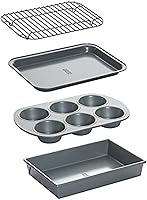
The Chicago Metallic 4-Piece Toaster Oven Bakeware Set includes a 9.5 x 6.25 in baking pan, a 9.25 x 6 in cooling rack, an 11 x 7 in roast/cake pan, and a 6-cup muffin pan. Its heavy-weight aluminized steel construction has a nonstick coating and is oven safe to 450°F.
The pieces nest for storage, which suits small kitchens and RVs. Hand washing is recommended to help extend the coating's life, although the set is dishwasher safe.
Measure your Oster oven before using any pan. The stated pan size does not include the clearance needed for the rack, handles, airflow, and heating elements.
Can you cook pizza and convenience foods in a toaster oven?
Yes, if the food fits without touching the elements and the pan can handle the heat. Frozen pizza, chicken nuggets, fish fillets, pastries, and similar foods may need turning or checking during cooking.
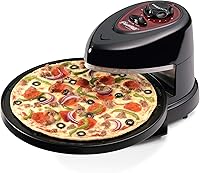
The Presto 03430 Pizzazz Plus Rotating Oven has a continuously rotating tray, separately controlled top and bottom heating elements, and a timer that signals the end of cooking and automatically turns off the heating elements. Its removable nonstick baking pan is made for 12 in pizzas and other convenience foods.
This appliance is different from a standard Oster toaster oven. It suits someone who mainly wants pizza and foods that benefit from rotating heat, while an Oster toaster oven is more flexible for toast, baking, broiling, and reheating.
Keep the rotating tray clear and use only food sizes that fit the pan. Allow the pan to cool before removing it for cleaning.
How do you cook larger meals without filling the Oster oven?
Use the Oster for smaller portions and a separate countertop roaster for larger dishes. A second appliance can help when a casserole or family meal would crowd the toaster oven.
The NESCO 4816‑14 Electric Roaster Oven has a 6-quart capacity, a porcelain-coated steel cookwell, and a 200°F–450°F temperature range. It supports roast, bake, cook, steam, and serve functions in a countertop design.
The removable porcelain-coated steel cookwell has a non-porous surface and is dishwasher safe. Stay-cool side handles help with moving the cookwell, but use care with hot food and follow the appliance instructions.
Choose this roaster when capacity matters more than toast or broil functions. Choose the Oster when you want a smaller cavity for bread, snacks, reheating, and compact baking.
How do you clean an Oster toaster oven?
Unplug the oven and let it cool completely before cleaning. Remove the crumb tray and rack if the manual allows it, then wipe loose crumbs and food residue with a soft, damp cloth.
Do not immerse the toaster oven, controls, cord, or plug in water. Avoid abrasive cleaners that can damage surfaces, and follow the manual for removable parts and the interior coating.
Clean spills before the next high-heat cycle. Grease and crumbs can smoke, produce odors, or create a fire risk when they remain near the heating elements.
Is an Oster toaster oven better than a full-size oven?
An Oster toaster oven is usually better for small portions, toast, snacks, and quick reheating, while a full-size oven offers more room for large pans. The better choice depends on portion size, cooking time, and available counter space.
A toaster oven can reduce the need to heat a large cavity for a small meal. It cannot replace a full-size oven when the pan is too large or when several dishes need to cook at once.
Compare the trade-offs in Is It Better to Use a Toaster Oven or an Oven?.
What should you remember when using an Oster toaster oven?
For how to use my Oster toaster oven, remember this order: choose the mode, set the temperature, set the timer, leave clearance around the food, and check early. Use bake for general cooking, toast for bread, broil for top browning, and convection when your model includes it.
Pick the Chicago Metallic set if you need compact pans for baking and reheating. Pick the Presto rotating oven for pizza-focused cooking, or the NESCO roaster when a 6-quart cooking space better matches your meals.
For another brand-specific guide, see How to Use a Hamilton Beach Toaster Oven, How to Use a Toaster Oven, or How to Use a Cuisinart Toaster Oven.
Frequently asked questions
How do I preheat an Oster toaster oven?
Choose the cooking mode and temperature, then set the timer for the preheat period recommended by your Oster manual or recipe. Wait until the oven reaches temperature before adding food when the recipe depends on a fully heated oven.
Some foods can start in a cold oven, but the cooking time may change.
What does the timer do on an Oster toaster oven?
The timer controls the cooking period and may shut the oven off when the selected time ends, depending on the model. It isn't always a precise temperature control.
Check your manual, use a separate timer when needed, and stay nearby when cooking foods that brown quickly.
Which Oster toaster oven setting should I use?
Use bake for cakes, casseroles, and general heating; toast for sliced bread; broil for browning from above; and convection if your model has a fan setting. Air-fry settings, if included, may need a different pan and cooking time.
Match the mode to the food and check the manual.
Can I use aluminum foil in an Oster toaster oven?
Use foil only when your Oster manual allows it and keep it away from heating elements. Never cover the crumb tray, block airflow, or let foil touch the oven walls or elements.
A small oven-safe pan is often easier to control for drips and loose food.